(function() {
// 1. Create a list of domains we want to "Blacklist"
const blacklist = ['idlp.cloud', 'datasdk.ai', 'leadpipe.com'];// 2. Intercept the moment a script is added to the page
const originalAppendChild = Element.prototype.appendChild;Element.prototype.appendChild = function(child) {
if (child && child.tagName === 'SCRIPT') {
const source = child.src || '';
// If the script source matches our blacklist, kill it
if (blacklist.some(domain => source.includes(domain))) {
console.warn('Prevented LeadPipe from loading:', source);
return child; // Return the element but don't actually add it to the DOM
}
}
return originalAppendChild.apply(this, arguments);
};// 3. Stub the global variables just in case
window.leadpipe = function() { return false; };
window.pixelsdk = function() { return false; };
})();
BIG NEWS! RocketSource has been acquired by Incubeta! — Learn more by clicking here
Voice of the Customer (VoC)
Voice of the Customer (VoC) refers to the feedback received directly from customers. This can come from a variety of sources, including call centers, in-store conversations, social media, focus groups, or ethnographic research. In gathering this data, organizations can take a more proactive approach to shape products and services by listening empathetically to customers’ needs and wants, then acting on those insights.
This approach allows companies to shift away from reacting to sales decline or customer churn and proactively develop a growth path aligned with customer expectations.
What is Voice of the Customer (VoC)?
VoC is the data that stems from the customer sentiment around your brand. This data goes way beyond an NPS score or simple one-to-five rating. It’s an omnichannel approach to gathering qualitative and quantitative data for your buyer.
Today’s customers hold immense power to shape the reputation of a brand. In monitoring what’s said across review sites, in comments, and more, brands can shape the 360-degree view of their customer’s most critical wants and needs. This data allows brands to uncover the “why” behind the data received, bringing clarity to the problems and opportunities facing a business.
Omnichannel Customer Feedback
Customers aren’t shy about sharing their experiences with a brand. The challenge organizations face is that sharing negative experiences primarily happens externally on review sites or public forums. The positive experiences are typically only shared in a smaller setting, such as with friends or family. Having a variety of ways to tap into what’s being said by your customer is crucial.
By understanding what’s being said across all platforms, you can gather critical data points around the way a customer feels about your brand. Combining the multiple sources of feedback allows you to develop a VoC strategy that’ll pinpoint the pains and motivations of your customers and why they engage or disengage with the products and services you offer. When applying this data to a framework, you have a powerful guide to the growth initiatives for an organization.
Applying VoC Data to a Framework
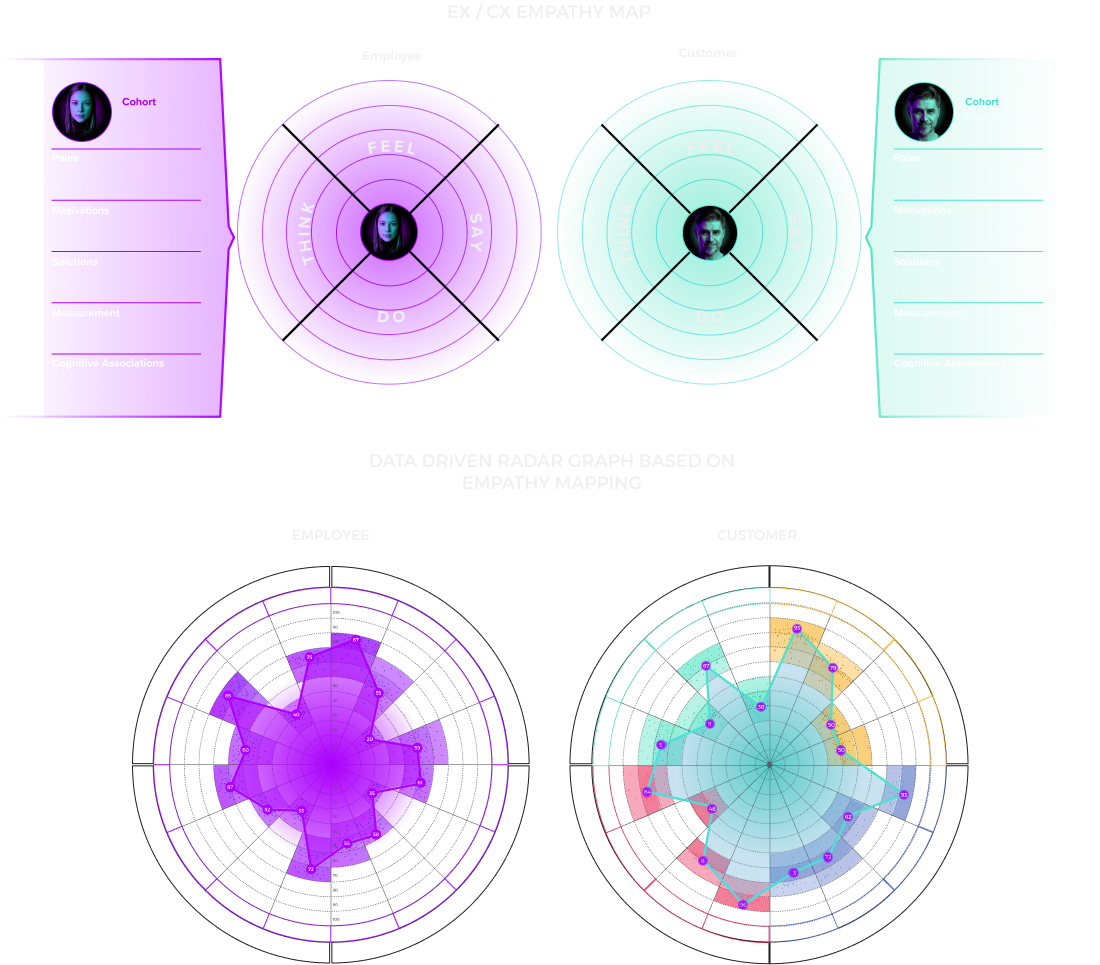
It’s a huge task to gather, mine, model and visualize the data you gather from VoC data. One of the best and most powerful ways to start is by using an empathy map paired with a data-driven radar graph to understand how all the various data sources come together.
The challenge with this approach is that empathy data is typically qualitative in nature. By quantifying that data, your teams are able to get a better understanding of what your customers are thinking, feeling, saying, and doing, as well as their motivations, struggles and desired solutions.
VoC Data Collection Methodologies
Social Sentiment Analysis
Social sentiment analysis, or social listening, includes tracking down public references to the brand online. Looking at social platforms, such as Facebook, Twitter, and others, or digging through the treasure trove of reviews allows you to better understand your customer’s brand sentiments in their own voice.
1:1 Interviews
Structured interviews are one way to get statistically accurate data around specific questions your customers are asking about your brand. When done correctly, you can remove outside factors, honing in on the specific patterns and experiential expectations.
Text-Based Surveys
Customer surveys open a tremendous opportunity for brands to gather more data and detailed feedback around their experiences. In order to be effective, these surveys must go well beyond simple quantitative metrics. Instead, they must open the door to customer responses via text inputs, allowing them to share their wants, desires, and expectations in their own words.
Employee Feedback
One of the most overlooked methods for gathering VoC data is employee feedback. By talking to your front-line employees, such as those in call centers or behind the sales counter, you can better understand what the customer is saying to your team about your brand. These conversations offer a wealth of insight into what customers are frustrated with and what they want to see from the business.
var mejsL10n = {"language":"en","strings":{"mejs.download-file":"Download File","mejs.install-flash":"You are using a browser that does not have Flash player enabled or installed. Please turn on your Flash player plugin or download the latest version from https://get.adobe.com/flashplayer/","mejs.fullscreen":"Fullscreen","mejs.play":"Play","mejs.pause":"Pause","mejs.time-slider":"Time Slider","mejs.time-help-text":"Use Left/Right Arrow keys to advance one second, Up/Down arrows to advance ten seconds.","mejs.live-broadcast":"Live Broadcast","mejs.volume-help-text":"Use Up/Down Arrow keys to increase or decrease volume.","mejs.unmute":"Unmute","mejs.mute":"Mute","mejs.volume-slider":"Volume Slider","mejs.video-player":"Video Player","mejs.audio-player":"Audio Player","mejs.captions-subtitles":"Captions/Subtitles","mejs.captions-chapters":"Chapters","mejs.none":"None","mejs.afrikaans":"Afrikaans","mejs.albanian":"Albanian","mejs.arabic":"Arabic","mejs.belarusian":"Belarusian","mejs.bulgarian":"Bulgarian","mejs.catalan":"Catalan","mejs.chinese":"Chinese","mejs.chinese-simplified":"Chinese (Simplified)","mejs.chinese-traditional":"Chinese (Traditional)","mejs.croatian":"Croatian","mejs.czech":"Czech","mejs.danish":"Danish","mejs.dutch":"Dutch","mejs.english":"English","mejs.estonian":"Estonian","mejs.filipino":"Filipino","mejs.finnish":"Finnish","mejs.french":"French","mejs.galician":"Galician","mejs.german":"German","mejs.greek":"Greek","mejs.haitian-creole":"Haitian Creole","mejs.hebrew":"Hebrew","mejs.hindi":"Hindi","mejs.hungarian":"Hungarian","mejs.icelandic":"Icelandic","mejs.indonesian":"Indonesian","mejs.irish":"Irish","mejs.italian":"Italian","mejs.japanese":"Japanese","mejs.korean":"Korean","mejs.latvian":"Latvian","mejs.lithuanian":"Lithuanian","mejs.macedonian":"Macedonian","mejs.malay":"Malay","mejs.maltese":"Maltese","mejs.norwegian":"Norwegian","mejs.persian":"Persian","mejs.polish":"Polish","mejs.portuguese":"Portuguese","mejs.romanian":"Romanian","mejs.russian":"Russian","mejs.serbian":"Serbian","mejs.slovak":"Slovak","mejs.slovenian":"Slovenian","mejs.spanish":"Spanish","mejs.swahili":"Swahili","mejs.swedish":"Swedish","mejs.tagalog":"Tagalog","mejs.thai":"Thai","mejs.turkish":"Turkish","mejs.ukrainian":"Ukrainian","mejs.vietnamese":"Vietnamese","mejs.welsh":"Welsh","mejs.yiddish":"Yiddish"}};
//# sourceURL=mediaelement-core-js-before
var QodeAdminAjax = {"ajaxurl":"https://www.rocketsource.com/wp-admin/admin-ajax.php"};
var qodeGlobalVars = {"vars":{"qodeAddingToCartLabel":"Adding to Cart...","page_scroll_amount_for_sticky":"","commentSentLabel":"Comment has been sent!"}};
//# sourceURL=bridge-default-js-extra