

Hallucinations happen when generative artificial intelligence (AI) platforms produce a misleading or meaningless output that does not align with prior training or logical reasoning. These hallucinations can be clear and humorous diversions from what the expected response should be. Other times, they can be disturbing.
Because of the possibility for AI platforms to have hallucinations, many organizations hesitate to tap into their capabilities for front-facing tasks, such as customer service or employee training. The risk of inaccurate or misaligned messaging with the brand due to a hallucination can cause teams to struggle to sort through what’s true and what isn’t.


What Causes AI Hallucinations?
Artificial intelligence hallucinations don’t happen because two proverbial wires get mixed on a server. They happen due to a variety of algorithmic misfires, such as:
- Tapping into outdated data
- Referencing low-quality training data
- Accessing factual errors, inconsistencies, or biases
- Insufficient programming
- Lack of context or understanding of colloquialisms
When it appears the AI has gone rogue and is no longer delivering a reasonable response, it’s most often due to misunderstandings and miscalculation of the data it’s received to train the algorithm.
Can You Prevent AI Hallucinations?
Even the most advanced generative AI platforms experience hallucinations from time to time. While it’s still seemingly impossible to prevent AI hallucinations altogether, there are some things you can do to help curb the risk of them appearing.
Training the algorithm correctly from the start is perhaps the most critical part of reducing AI hallucinations. When using generative AI for a specific purpose, teams can train the model by limiting the number of possible outcomes. This regulates the extremity the model can deliver when generating responses.
Likewise, training the algorithm using only relevant and specific sources allows the model to lean on the most relevant information. By telling your AI model what you want and the information to use when delivering that outcome, you put up the guardrails to help prevent AI hallucinations to the extent you can.


Risks of AI Hallucinations
AI hallucinations are a real threat, and because of that, there are risks to implementing AI too fast and without oversight.
Inaccurate outputs can go beyond simply “getting it wrong.” They can spread misinformation, lead professionals unknowingly in the wrong direction, or breed hate if left unchecked. Although the output may look convincing, it could still be inaccurate. Those inaccuracies aren’t ones you’d want doctors relying on when diagnosing a serious condition, for example.
When using AI to be the front face for your customer service or conversations, you risk eroding the customer experience. Not only could your organization lose valuable buyers, but you could also bump into legal issues in the process.
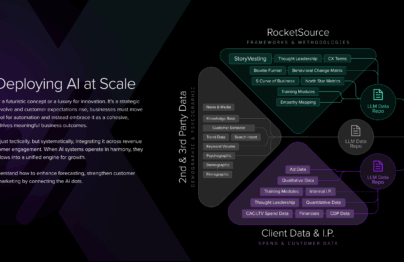
Having human oversight is critical when tapping into AI. Likewise, having a framework, such as the StoryVesting framework, to determine when and how best to leverage AI is crucial to avoiding these risks.
Best Practices With AI to Mitigate Hallucinations
As you implement AI into your organization, here are a few areas to consider so that you can sidestep AI hallucinations, maintain a healthy work culture, and effectively reach your customers.

Infuse Humanity Into AI
Calibrate your decision-making around when and how to use generative AI in your organization by asking the question, Is this good for humanity? If the answer is no, or if it’s nebulous, then pull back on tapping into generative AI until that answer is clearer.

Monitor Training Data
Hallucinations often occur because of poor or inaccurate training data. When choosing the right generative AI platform for your organization, monitor the training data it receives. In doing so, you’ll know what AI is learning and where those learnings could go askew.

Train Via the StoryVesting Framework
Our proprietary StoryVesting framework is rooted in data and analytics. By walking through the StoryVesting concentric circles and seeing how generative AI applies across the board, team scan better train models and infuse new platforms so that teams and customers alike have a better experience.

Build Data Loops
Feedback and data loops allow teams the opportunity to share any hallucinations so that organizations can dig deeper and find where and how the hallucination occurs. In implementing these loops, feedback can be reported quickly and possible future hallucinations can be prevented.


Customer Experience (CX) Terms
- 360° Degree View of the Customer
- Agentic AI
- AI Ops
- Annual Recurring Revenue
- Behavioral Economics
- Behavioral Insights Matrix
- Behavioral Triggers
- Bow Tie Funnel
- Brick-to-Click
- Business Impact Analysis (BIA)
- Cognitive Computing
- Cohort Analytics
- Content Mapping
- Convergence / Divergence Bands
- Conversational User Guidance
- Customer Data Profile
- Customer Experience (CX)
- Customer Friction
- Customer Insights Map
- Customer Journey
- Customer Journey Mapping
- Customer Satisfaction (CSAT)
- Customized Ratios
- CX Intelligence
- CX Led Growth
- CX Metrics
- Data as a Product (DaaP)
- Data as a Service (DaaS)
- Data Culture
- Data Driven
- Data Engineering
- Data Fabric
- Data Governance
- Data Humanization
- Data Hygiene
- Data Looping
- Data Mapping
- Data Mining
- Data Modeling
- Data Monetization
- Data Swamp
- Data Visualization
- Data Warehouse
- Data-Centric
- Descriptive Analytics
- Diagnostic Analytics
- Digital Asset Management (DAM)
- Digital Transformation
- Dirty Data In Dirty Data Out
- Domain Specific Models
- Embedded Intelligence
- Empathy Mapping
- Employee Data Profile
- Employee Experience (EX)
- EPS
- EX to CX Data Mapping
- EX to CX Mapping
- Experience Management (XM)
- Foundation Models
- Gap Analysis
- Generative Adversarial Network
- Generative AI
- GEO
- Hallucinations
- Human-Centered Design (HCD)
- IRR
- Journey Analytics
- Large Language Model
- Machine Learning (ML)
- Managed Agile Services on Demand
- Model Training
- Modified Hoshin
- MRR
- Neural Network
- North Star Metric
- Party Data
- Pathway to Purchase
- Predictive Analytics
- Product-Market Fit Mapping
- Real Time Design Looping
- Revenue Acceleration
- RevOps
- ROAS vs. ROI
- S Curve of Growth
- Stack Impact Analysis
- StoryVesting
- Table Stakes Testing
- The 3 P’s
- Transformers
- User Experience (UX)
- User Insights Map
- User Interface (UI)
- Vector Database
- Vector Database Copy
- Voice of the Customer (VoC)
- Voice of the Employee (VoE)
- X Analytics