BIG NEWS! RocketSource has been acquired by Incubeta! — Learn more by clicking here
Generative Adversarial Network
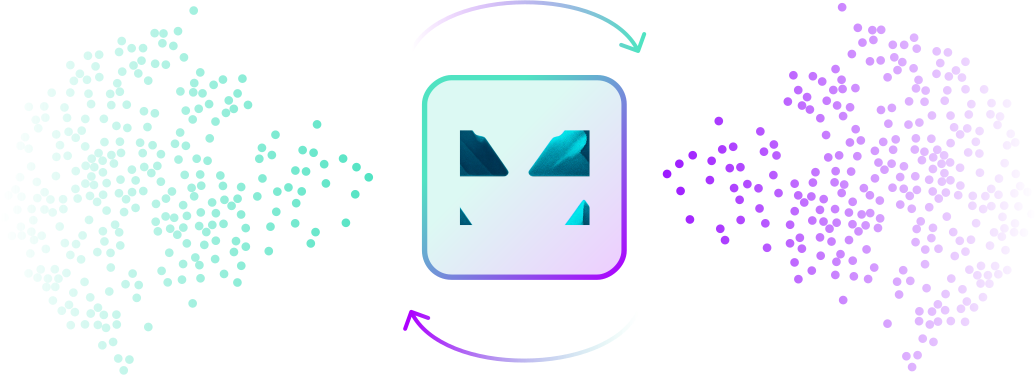
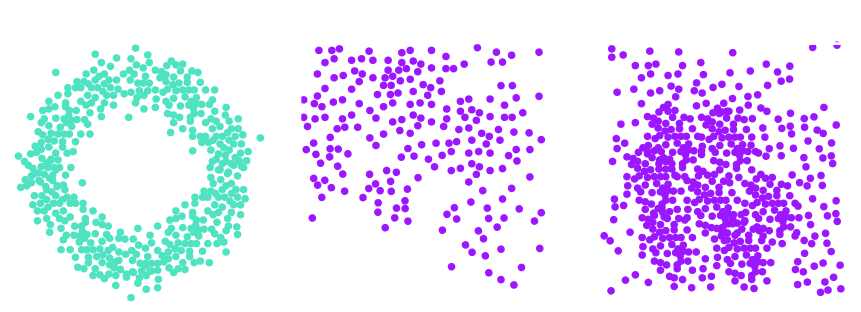
Generative Adversarial Networks (GANs) are training models to help improve outputs from artificial intelligence (AI). The way it works is by using two neural networks alongside each other to analyze, capture, and copy variations within the data. One of these networks is the “generative” network and is used to create (or generate) new plausible outputs from the data it received. The adversarial network takes the generated examples and learns to differentiate the outputs in an effort to fool the generative network.
This back-and-forth game isn’t just played for fun. It’s used to improve the accuracy of AI’s outputs. By conducting the learning in an unsupervised setting, GANs are able to improve AI’s understanding of the real and fake samples, so that it continuously improves its capabilities.
The Purpose of General Adversarial Networks in Enterprise
There’s a lot of noise in data, which is why data hygiene is so critical when it comes to how organizations use AI. GANs offer another layer to taming this noise and parsing out what’s relevant versus what isn’t for AI.
By training neural networks on how to accurately classify things while simultaneously offering it more data and information to work from, GANs help train AI in an environment with a zero-sum game so that it generates more plausible outputs in the real world.
Tapping Into Generative Adversarial Networks
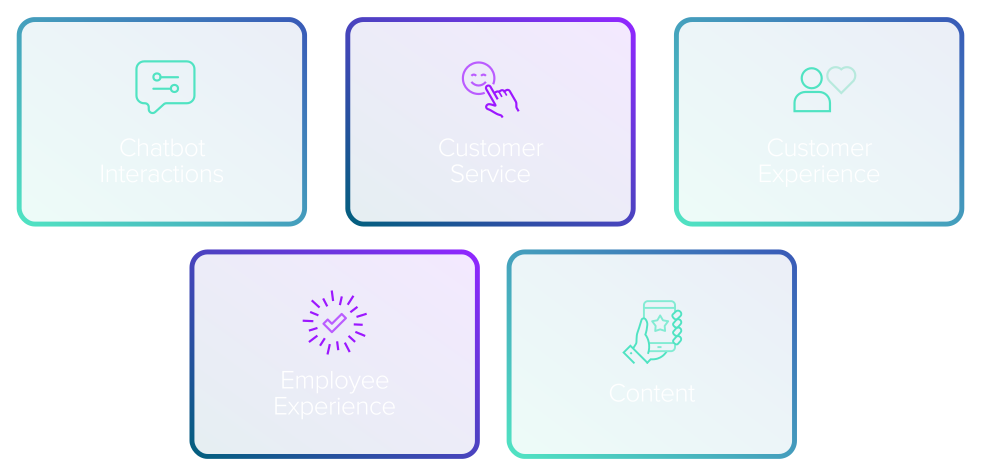
When wielded correctly, GANs offer a wide range of benefits to organizations. Synthetic data generation allows teams to spot anomalies and enhance data augmentation. As such, GANs can improve higher quality results for videos, chatbot interactions, customer service, and more bolstering both the employee and customer experience. Because it’s done in an unsupervised learning without labeled data, AI can be better leveraged to spot patterns and identify trends.
GANs are applicable to a variety of scenarios in enterprise:
Image synthesis
Text to image synthesis
Translations
Speech to text analysis
Understanding how to properly infuse GANs into your organization and train it accurately on a domain-specific model requires teams to look at their approach through an experiential lens. At RocketSource, we leverage the StoryVesting framework to pair the human experience with modern technology. In doing so, we can avoid some of the challenges that come with relying too heavily on GANs.
Challenges of Generative Adversarial Networks
While there are certainly a lot of benefits and admirable outcomes from using GANs, there are also some risks associated with this technology.
Training GANs can be unstable at times, causing collapse, failure to converge, or taking up high computational resources for large data sets. That’s especially true when training GANs with image recognition and regeneration.
GANs also has the tendency to be overfitted, producing overly synthetic data without diversity. In doing so, organizations risk leaning too much on these AI generated images and distancing themselves from the market’s cognitive associations of their brand. When GANs are trained to learn bias or discriminatory synthetic data, it can erode brand trust and harm the overall experience.
Leveraging Generative Adversarial Networks in Enterprise
Monitoring GANs training and outputs through the lens of StoryVesting, a framework rooted in behavioral economics allows organizations to mitigate these risks while simultaneously tapping into the power of generative AI. In return, GANs have the ability to yield tremendous results for the organization that properly deploys this technology.
Enhance Data Augmentation
Data augmentation leads to better performance in generative AI by reducing overall errors. By using GANs to help fuel data augmentation, teams get more plausible examples in a more domain-specific approach.
Product-Market Fit
GANs are known for their ability to reproduce images with slight variations. This image reproduction can help recreate 3D images for product prototypes that can be tested while product-market fit mapping. In taking this approach, teams can reduce developmental risks and lower overall project costs.
Improve Employee Experience
When teams have faster access to more accurate images, ideas, and improvement suggestions for products, their workflow is easier and more efficient. GANs can work alongside teams to improve the employee experience by enhancing team outputs in less time. In addition, this type of generative AI can take tedious tasks off employee’s plates, allowing them to lean into their human skillset with more ease and enjoyment.
Personalize Customer Experiences
Because GANs takes current data and reproduces it to find alternative solutions, many organizations are starting to leverage this technology to personalize experiences. By using customer data profiles to enhance product descriptions, build personalized customer journeys, and improved notifications are just some of the ways teams can use GANs to personalize the customer experience.
var mejsL10n = {"language":"en","strings":{"mejs.download-file":"Download File","mejs.install-flash":"You are using a browser that does not have Flash player enabled or installed. Please turn on your Flash player plugin or download the latest version from https://get.adobe.com/flashplayer/","mejs.fullscreen":"Fullscreen","mejs.play":"Play","mejs.pause":"Pause","mejs.time-slider":"Time Slider","mejs.time-help-text":"Use Left/Right Arrow keys to advance one second, Up/Down arrows to advance ten seconds.","mejs.live-broadcast":"Live Broadcast","mejs.volume-help-text":"Use Up/Down Arrow keys to increase or decrease volume.","mejs.unmute":"Unmute","mejs.mute":"Mute","mejs.volume-slider":"Volume Slider","mejs.video-player":"Video Player","mejs.audio-player":"Audio Player","mejs.captions-subtitles":"Captions/Subtitles","mejs.captions-chapters":"Chapters","mejs.none":"None","mejs.afrikaans":"Afrikaans","mejs.albanian":"Albanian","mejs.arabic":"Arabic","mejs.belarusian":"Belarusian","mejs.bulgarian":"Bulgarian","mejs.catalan":"Catalan","mejs.chinese":"Chinese","mejs.chinese-simplified":"Chinese (Simplified)","mejs.chinese-traditional":"Chinese (Traditional)","mejs.croatian":"Croatian","mejs.czech":"Czech","mejs.danish":"Danish","mejs.dutch":"Dutch","mejs.english":"English","mejs.estonian":"Estonian","mejs.filipino":"Filipino","mejs.finnish":"Finnish","mejs.french":"French","mejs.galician":"Galician","mejs.german":"German","mejs.greek":"Greek","mejs.haitian-creole":"Haitian Creole","mejs.hebrew":"Hebrew","mejs.hindi":"Hindi","mejs.hungarian":"Hungarian","mejs.icelandic":"Icelandic","mejs.indonesian":"Indonesian","mejs.irish":"Irish","mejs.italian":"Italian","mejs.japanese":"Japanese","mejs.korean":"Korean","mejs.latvian":"Latvian","mejs.lithuanian":"Lithuanian","mejs.macedonian":"Macedonian","mejs.malay":"Malay","mejs.maltese":"Maltese","mejs.norwegian":"Norwegian","mejs.persian":"Persian","mejs.polish":"Polish","mejs.portuguese":"Portuguese","mejs.romanian":"Romanian","mejs.russian":"Russian","mejs.serbian":"Serbian","mejs.slovak":"Slovak","mejs.slovenian":"Slovenian","mejs.spanish":"Spanish","mejs.swahili":"Swahili","mejs.swedish":"Swedish","mejs.tagalog":"Tagalog","mejs.thai":"Thai","mejs.turkish":"Turkish","mejs.ukrainian":"Ukrainian","mejs.vietnamese":"Vietnamese","mejs.welsh":"Welsh","mejs.yiddish":"Yiddish"}};
//# sourceURL=mediaelement-core-js-before
var QodeAdminAjax = {"ajaxurl":"https://www.rocketsource.com/wp-admin/admin-ajax.php"};
var qodeGlobalVars = {"vars":{"qodeAddingToCartLabel":"Adding to Cart...","page_scroll_amount_for_sticky":"","commentSentLabel":"Comment has been sent!"}};
//# sourceURL=bridge-default-js-extra