

Two metrics that are often used interchangeably around boardrooms, but tell a different story based on their calculations are ROAS and ROI. This begs the question — what are the nuanced differences between these two metrics, and when is it most beneficial to use one over the other?
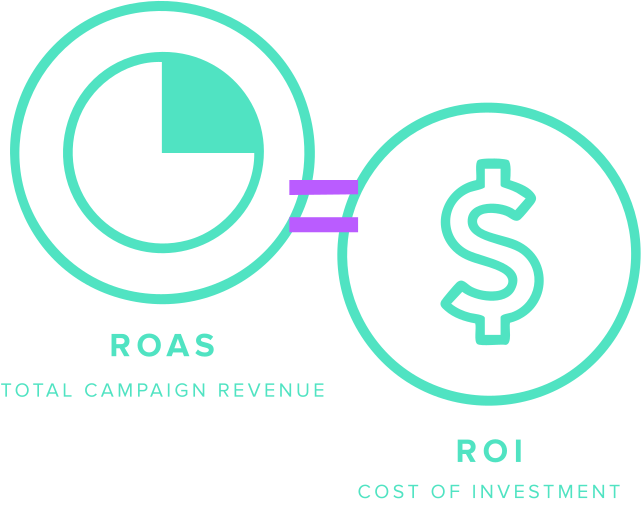
Return on Ad Spend (ROAS) calculates the total revenue generated from a specific advertising campaign.
Return on Investment (ROI) calculates the total contribution an ad made to the organization’s bottom line.
While it’s clear that these two metrics are similar on the surface, it’s important to understand when and how to use each one for the most accurate analysis of your marketing spending.
Understanding Return on Ad Spend (ROAS)
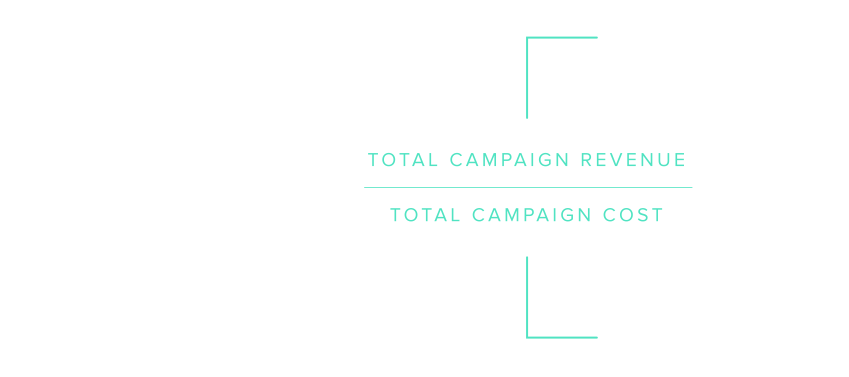
When looking at ROAS vs. ROI, think of the former as the more narrow metric of the two. ROAS isolates the effectiveness of specific ad campaigns. The formula to calculate ROAS is:
ROAS = (Total Campaign Revenue) / (Total Campaign Cost)
This formula shows you the gross revenue generated for every dollar you spent.
Because this formula is campaign specific, it only shows you how well certain campaigns performed. For example, if you’re looking at how effective a SuperBowl commercial was for your company, you’d use ROAS to calculate how many clicks, impressions, leads, or sales revenue that commercial generated.
When to Use Return on Investment (ROI)
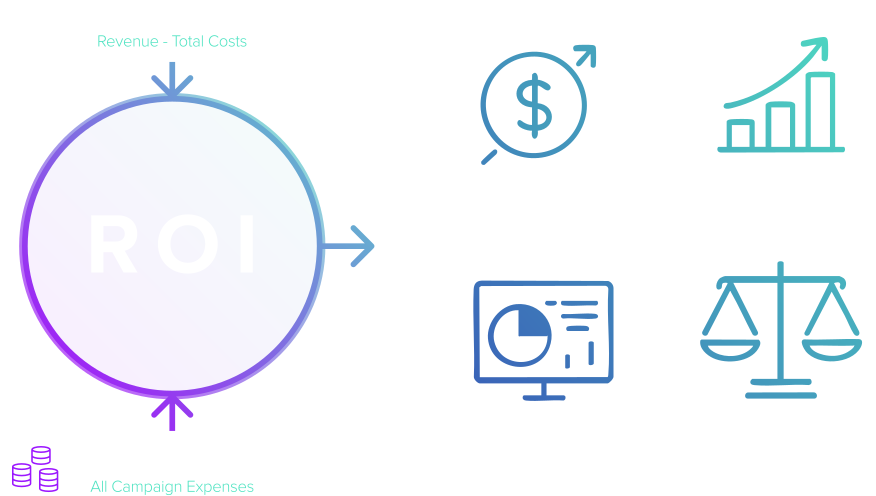
ROI looks at the broader picture, calculating how much profit was contributed to the organization’s bottom line from a campaign or group of campaigns. The formula to calculate ROI is:
ROI = (Net Profit) / (Net Spending) x 100
This total gives you the amount you earned after your total expenses. Taking the same example above, consider that the organization advertising on a SuperBowl commercial appeared to be profitable by getting $5 back for every dollar spent in advertising. However, that company had a 15% margin on the product. When calculating ROI, it was clear that the total expenses, not exclusively the campaign expenses, actually put the company in a loss.
ROAS vs. ROI: What’s Best for Analyzing Overall Campaign Success?
As you look at what to use — ROAS vs. ROI — try not to consider these two metrics in an either/or scenario. Both tell a different story, and both are equally valuable in their own right.
ROAS is a strong metric to judge whether a campaign makes sense to run. If you’re losing money for every dollar spent, you’re not seeing a return on your ad spend.
ROI keeps ROAS in check by comparing the campaign and all spending to the overall profitability of the company.
If ROAS is in the red, then it becomes clear that you’ll need to adjust to get your cost per action or cost per lead into the black so you’re earning money. Once you do, you can gauge how strong ROAS is by calculating ROI to see how profitable the campaigns are overall.
Key Benefits of Understanding ROAS vs. ROI
Knowing the difference between ROAS and ROI is important when you’re investing in advertising to grow the bottom line for your business.

Know When to Scale Your Marketing
Calculating ROAS and ROI allows you to know when it’s time to push the accelerator on a specific campaign and when that campaign will be profitable compared to the other costs your company incurs. This insight can help you grow faster with less risk because you’ll have proven the campaign’s success ahead of time.

Take a Predictive Stance
When you calculate ROI, you’re better equipped to understand when your product launches and investments will become more profitable. By calculating ROI you can put more specific numbers to your overall goals, make more aligned business decisions, and gain investor support.

Get Closer to Product-Market Fit
ROAS can help you see which campaigns resonate with your audience, helping you identify the stickiest pain points and the most effective messaging. That messaging can help steer onboarding, retention efforts, and product development, helping build product-market fit over time.

Break Down Silo Walls
Employees work more cohesively when everyone is looking at the same information. By gauging ROAS and ROI alike, your team gets the metrics and insights needed to shape strategic decisions across the board, getting teams out of silos and into a more collaborative posture.


Customer Experience (CX) Terms
- 360° Degree View of the Customer
- Agentic AI
- AI Ops
- Annual Recurring Revenue
- Behavioral Economics
- Behavioral Insights Matrix
- Behavioral Triggers
- Bow Tie Funnel
- Brick-to-Click
- Business Impact Analysis (BIA)
- Cognitive Computing
- Cohort Analytics
- Content Mapping
- Convergence / Divergence Bands
- Conversational User Guidance
- Customer Data Profile
- Customer Experience (CX)
- Customer Friction
- Customer Insights Map
- Customer Journey
- Customer Journey Mapping
- Customer Satisfaction (CSAT)
- Customized Ratios
- CX Intelligence
- CX Led Growth
- CX Metrics
- Data as a Product (DaaP)
- Data as a Service (DaaS)
- Data Culture
- Data Driven
- Data Engineering
- Data Fabric
- Data Governance
- Data Humanization
- Data Hygiene
- Data Looping
- Data Mapping
- Data Mining
- Data Modeling
- Data Monetization
- Data Swamp
- Data Visualization
- Data Warehouse
- Data-Centric
- Descriptive Analytics
- Diagnostic Analytics
- Digital Asset Management (DAM)
- Digital Transformation
- Dirty Data In Dirty Data Out
- Domain Specific Models
- Embedded Intelligence
- Empathy Mapping
- Employee Data Profile
- Employee Experience (EX)
- EPS
- EX to CX Data Mapping
- EX to CX Mapping
- Experience Management (XM)
- Foundation Models
- Gap Analysis
- Generative Adversarial Network
- Generative AI
- GEO
- Hallucinations
- Human-Centered Design (HCD)
- IRR
- Journey Analytics
- Large Language Model
- Machine Learning (ML)
- Managed Agile Services on Demand
- Model Training
- Modified Hoshin
- MRR
- Neural Network
- North Star Metric
- Party Data
- Pathway to Purchase
- Predictive Analytics
- Product-Market Fit Mapping
- Real Time Design Looping
- Revenue Acceleration
- RevOps
- ROAS vs. ROI
- S Curve of Growth
- Stack Impact Analysis
- StoryVesting
- Table Stakes Testing
- The 3 P’s
- Transformers
- User Experience (UX)
- User Insights Map
- User Interface (UI)
- Vector Database
- Vector Database Copy
- Voice of the Customer (VoC)
- Voice of the Employee (VoE)
- X Analytics