



Leveraging the StoryVesting Framework to Achieve Breakthrough Business Transformation
If you asked what the term Business Transformation meant 20 years ago, you would’ve received a very different answer than what you’ll get today. A couple of decades ago, you likely would’ve heard a woven, convincing fictional narrative filled with hypothetical business examples. And it wouldn’t have been a bad approach — for then or now — because there’s power in all stories, fictitious and real.
The use of “once upon a time” has been capturing the interest of crowds since the 1600s — heck, maybe even earlier. Thanks to our rich history of oral tradition, we naturally perk up at the thought of hearing a good story, which is why storytelling is still a major element in media today. Our continued love of storytelling is why millions of people tune into reality television to watch who will get the final rose or be voted off the island. It’s why we watch documentaries and biographies with anticipation or watch people’s daily lives unfold in real-time on social media.
There are even websites, like Peoplepedia, dedicated to publishing life stories. One obvious example of storytelling in media is the TV series actually titled Once Upon A Time. This show bases its entire plot structure around our fascination with classic fairy tales. Fairy tales bring us together, but science suggests that our desire to indulge in this guilty pleasure goes far deeper than that.
The reason fiction leaves such an impact is because of what it does to our brain. Researchers in Spain studying the neuroscience of stories found that we aren’t just processing language when we consume fiction. When we read a story our brain lights up in the same areas it would if we were actually experiencing what’s unfolding in the story itself. There’s a plotline, a hero, a villain, a climax and a resolution. Our brain empowers us to feel the rush of the highs and the devastation of the lows as we encounter each of these elements — something that would be nearly impossible to achieve by looking at bullet point highlights alone.
Perhaps it’s because of this physical response to stories that people have started telling their own stories via social media. As of March 2018, there were 450 million statuses shared on WhatsApp, 191 million snaps shared on Snapchat, and well over 300 million stories shared on Instagram every day, according to Facebook’s and Snap Inc.’s quarterly reports. Why are millions of people publicizing the details of their life? To form a connection.
 Princeton researcher Uri Hasson found that, whether a story is fiction or truth, the brain of the storyteller actually synchronizes with that of the listener, allowing the storyteller to plant ideas, opinions and emotions in someone else’s brain. Because stories engage the brain as though we’re living the experience ourselves, it makes sense that non-fictional stories are a potential gateway to deeper empathy. That’s why we crave these real stories where truth abounds. Jeremy Hsu of Scientific American found:
Personal stories and gossip make up 65% of conversations.
What does the varied media consumption of all of these stories have to do with business transformation? A lot, actually.
Today, the explanation of Business Transformation would be as genuine as they come. That’s because we’re neck-deep in a technological revolution that’s changing the way people tell their stories and the way they hear stories told by organizations. What worked for businesses several years ago isn’t working today.
Today, transparency and authenticity are at the very heart of our socioeconomic backdrop and the way in which we approach brand experiences. When told truthfully and authentically, an organization’s story can attract customers and employees who will live and die by their brand, but to do that effectively requires that companies adjust the way they engage with today’s modern consumer.
SPOILER ALERT (kind of): If you think this post is about telling stories authentically, it’s not. Business Transformation is a lot more complex than that and we’re not going to waste your time and insult your intelligence. We’re pretty sure you’ll learn something new, so buckle up…this post is a doozy and we hope you’ll get a plethora of value and even some key ideas from reading it.
The Undeniable Need For a Contiguous Business Transformation Strategy
Modern consumer behavior is changing, and today’s buyers are demanding more from the companies they work with. Real-time consumption and purchases are becoming the norm. 10% of retail sales happen online, and that number is expected to grow by nearly 15% over the next few years. Even when purchases aren’t made online, purchase decisions often are. BrightLocal’s local consumer review survey found that:
85% of consumers trust online reviews as much as personal recommendations, reshaping traditional word-of-mouth marketing as we know it.
And the way we receive the products we buy has changed too, with Airbnb selling experiences and taxi cabs getting a run for their money with the global proliferation of companies like Uber and Lyft.
These new expectations and buying behaviors have accelerated an undeniable necessity for companies to transform alongside the market — not just as a one-off event but more as a sustained, contiguous business transformation strategy.
We recently wrote about the S Curve of Business, which showcases the natural shape of business growth as well as what happens when businesses encounter the need to pivot. If you’re unfamiliar with the process, you’re encouraged to give that post a good read. In the meantime, we’ve summarized what happens on the S Curve of Business in a long but insightful display. Although it’s long, every component is critical in its own right. If you want to see the complete infographic in all its glory, feel free to download it in the resources section at the end of this post.

Although business transformation is complex in nature, we made things simple by looking specifically at how to manage the S Curve of Business (also referred as the S Curve of Growth) as it pertains to transformation. We were able to scale back to three core stages — rising out of strategic inflection points, running a data-looping mechanism to aggregate the flood of data points available, and then modeling them to draw out valuable insights that direct the next phase of your journey.
There’s a lot to each layer of this, so let’s go through it piece-by-piece.
Stage 1: The Strategic Inflection Point
No business we’ve ever consulted with has experienced a linear upward progression. It’s more common for business growth to scale rapidly, plateau, and possibly slump ever-so-slightly before launching into further growth. We call these plateaus and slight dips inflection points.

Although strategic inflection points themselves aren’t new, what is new to today’s market is the speed at which businesses are encountering these points. In the past, the average company experienced one inflection point every ten years. Nowadays, with the ubiquity of and easy access to tools, resources and talent, the S Curve of Business is becoming more and more condensed, so that businesses are experiencing inflection points every two years.
These dips on the S Curve of Business pose an opportunity to propel your business into its next evolution. But today, with the amount of digital disruption in the market, inflection points aren’t just opportunities — they signal a need for change.
As evidence, let’s look at how technology is disrupting the construction industry. Through emerging technology and advanced use of data, a Chinese construction company was able to build a 57-story building in just 19 days.
Timelapse of Building in China
Pretty impressive! To put context to this, the Freedom Tower in New York City took over seven years to complete. For construction companies to compete with that level of speed and innovation, they need to adopt an agile approach and transform using the latest technological advancements. Without question, technology is getting smarter by the day, and it’s impacting businesses of all sizes in all industries. Whether your business is an ark, sailing with incredible velocity but dampened reflexes, or a tiny speedboat, fighting hard to make headway yet able to swerve at a moment’s notice, the ability to adopt new technologies is critical for growth.
Stage 2: Aggregating an Abundance of Data
It’s not just the latest and greatest technology that’s driving this necessity for transformation. It’s the sheer amount of data available today. To inform positive transformation, tapping into these disparate data sets is critical.

As data pours into an organization it must be aggregated and mined for insights. Although it might sound simple, this is the point at which most businesses get stuck. It’s a hard process that requires many team players and a calculated approach to ensure that you’re modeling the right data from these various data sets.
We’ll dig into more detail about how data are collected and mapped to pull out insights later in the post, but for now, it’s important just to recognize that this shift is happening. Organizations tapping into these data are practicing intelligent transformation, while organizations that still rely on opinion and guesswork to navigate inflection points are failing.
Stage 3: Drawing Insights From Data
Collected data is, in and of itself, worthless. It’s the insights derived from those data that matter. To gather the information needed to run an intelligent operation data must be run through prediction analyses, which will give you a glimpse of what the future looks like for your customer base. But having those data-centric conclusions at your fingertips isn’t enough. In order to make your data actionable, you must run the insights you’ve uncovered through a framework.

A framework serves as a guide for future initiatives. It drives decision making and keeps the organizational ship on course, which is important because, as McKinsey determined:
70% of business transformation projects fail.
BlackBerry is a good example of one of these failed companies.
Case Study: BlackBerry’s Failure to Grow on the S Curve of Business
BlackBerry was one of the pioneers of the smartphone industry. At one time, in fact, it was considered a disruptor. The company forcefully entered the market by empowering professionals to easily keep in touch with the office regardless of their location, which led to significant increases in productivity. Companies loved the devices and bought them in bulk for employees to use. The phones soon earned the nickname “Crackberries” because they were so addictive.
In 2011, at the height of Blackberry’s success, more people were buying smartphones than personal computers. Apple’s iPhone was taking the consumer market by storm, causing a distinct shift in how people engaged with the world at large, not just within their professions. It was at this point that BlackBerry reached a strategic inflection point, and it was at this point that they started to suffer. Although companies preferred the BlackBerry because of its focus on “professional features,” improved security and limited distractions, the end user — the people craving a bigger screen and better app options — wanted more than Blackberry devices offered.

BlackBerry tried to keep pace with the iPhone by adopting a new design, but their attempts at iterating on their phones went in the wrong direction. They didn’t have their end user in mind, which ultimately caused them to disconnect from what the market truly wanted. As a result, more professionals traded in their BlackBerries for smartphones that could do more than email, and by 2016 BlackBerry had stopped selling smartphones altogether.
It wasn’t a design flaw that caused BlackBerry to suffer a quick demise, but rather the lack of accurate, framework-guided insights that left them unable to successfully navigate out of a strategic inflection point. BlackBerry missed tremendous opportunities, and their smartphones fell out of use because they didn’t have the proper guidance when innovating on their product line.
Transformation guided by extrapolated data interpreted through a framework and then run through predictive analysis is the cornerstone of progress within any business. This kind of healthy transformation isn’t a disorienting significant shift or abrupt redefinition that makes your stomach drop. Instead, it’s a process of honoring and answering a natural progression toward growth.
Let’s look again at how the elements of our infographic work together.

The need for transformation is born out of strategic inflection points, but successful business transformation is done using intelligent insights. Through the sum of these three parts, businesses progress and surge ahead in the market. That progression is key.
People crave progression. The thought of stagnation likely strikes fear into the hearts of you and your peers. This desire for growth is a natural holdover from our days of hiding in caves for protection from animals with sharp teeth and claws. We’re often on the hunt for new and better ways to survive.
Your business requires the same amount of drive (and fear of stagnation) if it’s going to succeed. Just as you want to become a better version of yourself, your business does too. This initiative to evolve enables you to transform your business by propelling it into the next stage of its life — whatever that may be.
We speak of this urge to transform with confidence because we’ve experienced the benefits first hand. But it wasn’t guesswork that brought us here — it was research.
Over the course of those 20 years, we have built a robust business transformation framework. This framework has guided us through the success of multiple business consultations over the last decade and has taken us well past our initial goals. It started with a healthy amount of data from the responses of surveys conducted for well over a decade — 1,969 responses, to be exact. Before we get into what all those people taught us, let us go back to the beginning stages.
The Beginnings of a Modern Experience Framework
Business transformation is rarely a linear progression; rather, it is born from continuous research, observation, and market alignment. Developing a robust framework capable of guiding organizations through complex transitions requires aggregating a significant volume of data. Over the course of two decades, a deep-seated study involving 1,969 survey responses from organizational leaders and consumers was conducted to analyze what truly drives long-term business growth.
To understand the core of these findings, it is essential to first examine how perceptions of success influence human behavior and, consequently, modern business strategies.
Reevaluating the Definition of Success
In business and consumer psychology, success is often initially equated with tangible wealth or luxury. Just as a luxury vehicle or a pristine storefront can signal financial achievement, early business models often focused strictly on these outer markers of prosperity.
However, success is highly multifaceted, and its definition has evolved dramatically over time:
- The Subjective Nature of Success: While one consumer or employee may associate success with financial milestones, others define it through professional autonomy, work-life balance, or personal security.
- The Complexity of Motivation: Because personal and professional aspirations vary so widely, businesses cannot rely on a one-size-fits-all value proposition.
For an organization to successfully transform, it must look past superficial metrics of success and dig deeper into the complex, psychological drivers that motivate both its workforce and its customer base.
The Role of Human Psychology in Business
Understanding these diverse motivations requires a deep dive into human psychology and behavioral economics. To truly grasp how the human brain processes value, makes decisions, and builds brand loyalty, organizations must move beyond traditional financial models and study the cognitive mechanisms that dictate everyday behavior.
Fundamental psychological studies, such as Albert Bandura’s famous Bobo Doll experiment, illustrate the power of observational learning. Bandura demonstrated that children who observed adults acting aggressively toward a doll were highly likely to mimic that aggression later on.
Social imitation may hasten or short-cut the acquisition of new behaviors. – B.F. Skinner, Leader of Behaviorism
This principle of social modeling extends far beyond childhood development; it is a primary driver of adult consumer behavior. People naturally model the behaviors and decisions of those they observe. In the modern marketplace, this social imitation translates directly into how buyers rely on social proof to make purchase decisions. According to an online reviews survey by ReviewTrackers:
94% of consumers avoid a business if the review is negative.
Applying these psychological principles to a business transformation framework requires clean, proper experimentation and a deep understanding of data modeling. However, translating data into actionable success requires more than just numbers; it requires an understanding of the people driving the organization.
Industry leaders have long recognized that cultivating success requires a multifaceted, human-centric approach. Eric Schmidt, former Executive Chairman of Google and Alphabet, Inc., has frequently emphasized specific qualitative drivers when building high-performing teams. When evaluating what makes a business successful, Schmidt highlights the critical importance of hiring individuals who possess a deep passion for the company, unwavering persistence, and the innate curiosity to solve complex problems.
Furthermore, these traits must be fostered within an environment that prioritizes strong professional relationships. Organizations that become too laser-focused on rigid success metrics or isolated growth recipes often neglect the collaborative relationships that actually drive innovation. Ultimately, achieving sustainable success involves a complex blend of psychological understanding, data-driven strategy, and a deep investment in human capital.
The Test of Success and Innovation Business Transformation
To build a robust transformation framework, comprehensive research was conducted involving interviews with a diverse group of highly successful individuals. The participants were selected based on the following criteria:
- Individuals willing to openly discuss the drivers and methods behind their success.
- Leaders who had exerted a significant degree of influence and impact on others.
- Professionals with demonstrable success in terms of market impact and value.
This study specifically targeted professionals who had accomplished exceptional feats in their respective industries, including leaders from organizations like Sorenson Medical, the Huntsman Corporation, and England Trucking. The foundational question posed to each leader was simple: What qualities make a person successful?
While these discussions yielded valuable baseline observations—such as the fact that successful leaders are universally exceptional communicators—the answers were incredibly diverse. Attributed reasons for success ranged from having an excellent staff to simply experiencing good luck. Because variables like luck cannot be easily replicated or synthesized into an actionable business framework, a shift in methodology was required to find measurable consistencies.
In search of more consistent, quantifiable data, the line of inquiry was refined. The focus shifted to asking: What specific personal traits lead to success? This was paired with a secondary question: Who do you value the most that exhibits those traits? This revised approach uncovered a much deeper, more actionable layer of organizational psychology.
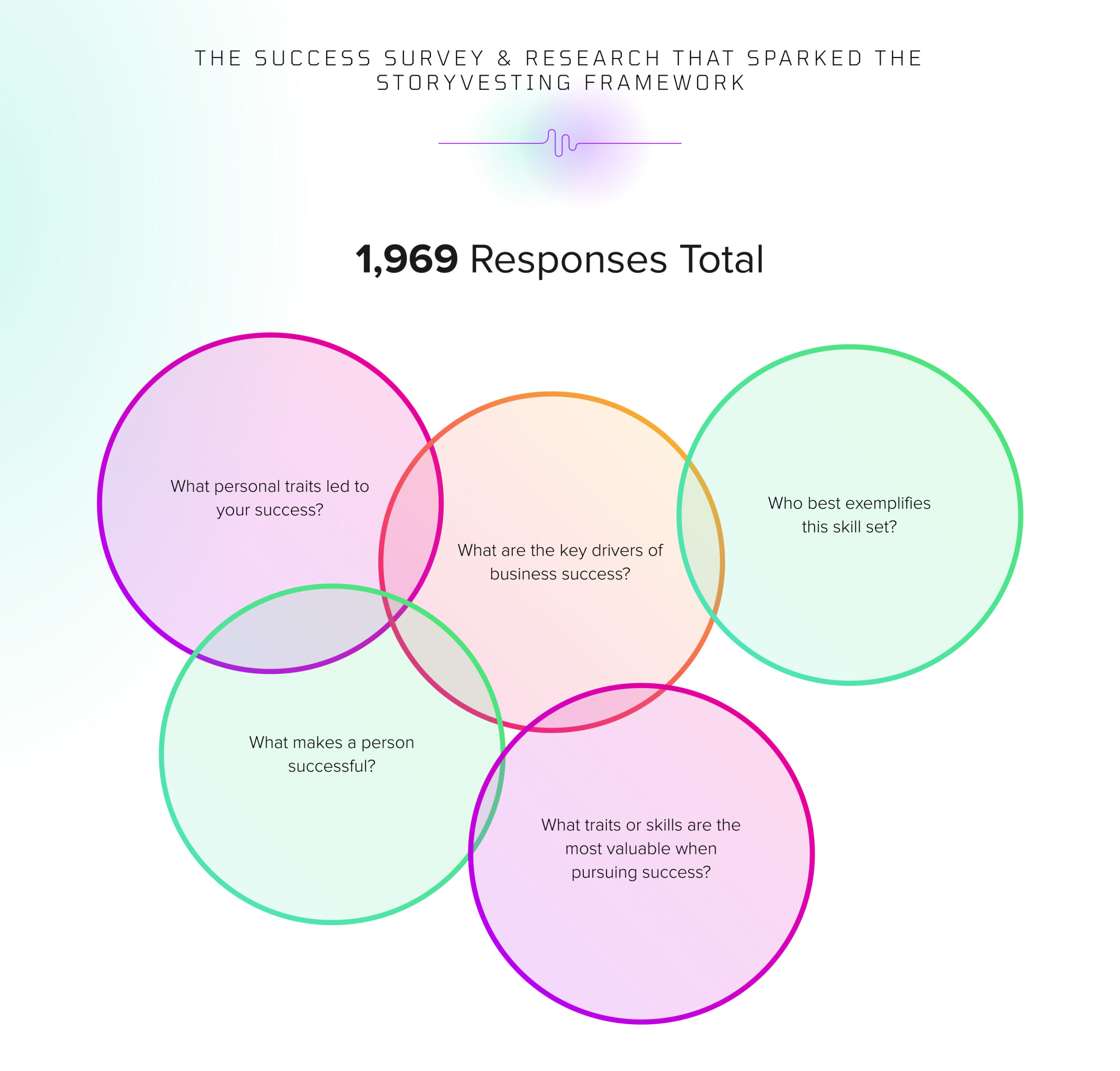
Using a branching research methodology, these primary subjects were then used to identify and interview the specific individuals whose traits they valued most. This cascading method of examination bypassed superficial answers and led to several remarkable realizations regarding organizational success.
Uncovering the Traits That Make People Successful
When analyzing the traits that lead to professional success—and the qualities businesses prioritize during the hiring process—traditional assumptions often favor elite, Ivy League educations. It is a common belief that advanced degrees from top-tier academic institutions are the strongest indicators of future success.
However, direct feedback from organizational leaders across HR, marketing, and the C-suite reveals a very different reality. While formal education often serves as a preliminary filter, it is rarely the primary driver of hiring or promotion decisions. Instead, the research points to a different set of priorities:

The most prominent trait associated with long-term success is a deep passion for the work, coupled with a strong ability to collaborate with others. In professional terms, modern executives define this ideal employee profile as someone who is fundamentally “vested.”
The keenest business owners don’t seek out employees with an Ivy League education. They seek out those who are vested.
It is important to analyze this data within its context. The survey pool consisted of individuals directly responsible for hiring, managing, and leading teams—those tasked with recruiting the ideal talent to drive business transformation. The findings highlight a critical organizational trend: the leaders driving rapid corporate growth place a premium on passion, collaboration, and work ethic over academic credentials.
Who Exemplifies the Traits That Make a Person Successful?
An equally compelling aspect of this research involved identifying who these successful leaders admired and relied on to achieve their goals. It is commonly assumed that top executives look to historical business icons like Steve Jobs or Henry Ford for inspiration, or that professionals naturally view their direct superiors as the ultimate models of success. Conventional wisdom suggests a manager would point to a director, a director to a VP, and so on up the corporate ladder. However, the data contradicts these hierarchical assumptions.
The survey results were highly diverse and featured significantly fewer C-suite executives than anticipated. Instead of looking upward, many leaders frequently referenced their career peers, the employees they managed, or professionals working in entirely different organizations.

This broad range of responses reveals a reciprocal view of success within corporate structures. While frontline employees often view managers and VPs as benchmarks of achievement, those higher up the corporate ladder frequently reflect that admiration downward. Leaders often express a desire to emulate the specialized competencies of their team members—admiring, for example, a strategist’s ability to balance high-level vision with granular details. Ultimately, highly successful individuals purposefully recruit and rely on team players who possess skills they admire and, in many cases, lack themselves.
Organizational Traits That Drive Business Transformation
Beyond individual traits, understanding the drivers of organizational success is critical. To determine what allows certain organizations to rise above the fray, the research posed another pivotal question: what are the key drivers that make an organization successful, both from a team and a company perspective?
63% of successful businesses consider company idea/vision to be a critical driver of organizational success.
The majority of respondents pointed to the business’s vision (or Why) as a critical driver behind the company’s success, especially during a transformation period. Organizational success is often more heavily tied to why a company is in business than the specific products it sells or the channels it uses.

While vision was the primary response, secondary drivers consistently revolved around the people vested in making that vision a reality. These answers place a much larger spotlight on the workforce than traditional business models typically dictate.
A closer analysis of the data reveals two key themes:
- The most important and valuable traits are not easily taught; they are typically ingrained within a person.
- Two notable mentions—specialized knowledge and broad intellect—can appear contradictory, as they demand individuals to be simultaneously specialized and omniscient.
This latter point is particularly telling. Contradictory expectations can be catastrophic to company culture, setting a standard that is ultimately unachievable. It is logical, then, that those two traits ranked at the bottom of the list. Instead, the true drivers of success and a healthy company culture center on an individual’s ability to be vested in the company’s mission and vision—traits like passion, collaboration, hard work, loyalty, and positivity. These are the elements that build sustainable momentum.
Overall, the data suggests that success is not rooted in tangible items or physical products, but is instead inseparably connected to people. This profound realization serves as the foundation for deeper organizational analysis, demonstrating that understanding the human element is just the beginning when it comes to driving true business transformation.
Success Confetti: Building an Intelligent Framework for Success
With 1,969 responses collected across various question sets, the next challenge was subjecting this raw data to rigorous analysis to extract actionable insights.
To begin this process, the data had to be carefully partitioned. Because the responses stemmed from several different lines of questioning, the raw data existed in silos and could not be easily merged without compromising its integrity. While running a statistical meta-analysis is one way to draw out consistencies across varying datasets, taking a highly qualitative approach often allows for a more nuanced understanding of human-centric business drivers.
This methodology required quantifying qualitative data—or humanizing it—which is a complex but necessary endeavor. By applying specific metrics to the subjective responses and synthesizing them piece by piece, clear organizational patterns began to emerge. These aggregated insights ultimately led to the development of a structured, intelligent framework for success. Rather than relying on theoretical concepts, this framework was built directly from the collected experiences of successful leaders, serving as a reliable guide for navigating growth and transformation across various business models.
The Architecture of the StoryVesting Framework
A robust business transformation framework must address multiple layers and complex operational nuances. While a framework should be deceptively simple at the surface level, it must function like a pocket watch: presenting an easily readable face while relying on intricate, overlapping internal mechanisms that coordinate in perfect unison.
To be effective, an experience framework must sustain multiple organizational layers, remain applicable across all departments, and align diverse business initiatives. It must be versatile enough to guide everything from development operations (DevOps) to growth marketing and customer experience (CX) strategies. Building a model that balances this high-level versatility with granular actionability requires focusing on core, unifying themes.
The Origin of the “StoryVesting” Model
Data analysis repeatedly points to two dominant, recurring variables essential for organizational alignment: the business’s core “story” (its foundational mission) and the cultivation of “vested” human capital. Combining these two elements forms the basis of the StoryVesting framework.
The Story is Your Business’s Why
In a corporate context, “story” does not refer to fictional brand marketing. Instead, it represents the non-fictional mission of the organization—commonly referred to as the Why.
A business’s Why is the foundational purpose behind the organization’s existence and the primary driver that motivates employees to show up and perform daily. Together, these elements solidify the brand’s relevance and value proposition in the marketplace.
A clear example of a brand anchored to its Why is Dodge. The truck manufacturer aligns much of its development and positioning with the agricultural sector. By creating utility vehicles built specifically for rugged labor and pairing them with highly targeted campaigns that showcase the daily lives of farmers, Dodge demonstrates an unwavering commitment to its core demographic.
For Dodge employees—whether they operate on the assembly line or in the marketing department—this defined mission offers a clear, shared purpose. It allows individuals with a passion for that community to find deeper fulfillment in their work, aligning their daily efforts with the brand’s broader market success. Without a strong foundational story backing organizational growth, maintaining a successful customer experience or driving a business transformation strategy becomes significantly more difficult.
This targeted positioning resonates deeply with a specific demographic that values hard labor, resilience, and reliability. For employees of such an organization—whether crafting the marketing campaigns or assembling the vehicles—a clearly communicated mission provides immediate clarity of purpose. Aligning the workforce with a concrete, visible outcome fosters a sense of shared contribution that goes beyond a standard paycheck. This alignment inherently encourages employees to actively contribute to the organization’s collective success.
Ultimately, without a defined and well-articulated mission backing corporate growth, executing a successful customer experience (CX) or business transformation initiative becomes highly challenging. Recruiting and retaining talent that is genuinely aligned with the organization’s central vision naturally amplifies and reinforces the brand message that the end consumer ultimately receives.
Cultivating Vested Employees
During discussions with organizational leaders, a distinct pattern emerged: companies with highly effective processes consistently attribute their success to employees who are strong collaborators, deeply passionate about their work, and fully aligned with the company’s vision. Executives frequently describe these high-performing individuals as being “vested.”
Traditionally, the term “vested” is associated with finance and corporate equity, referencing monetary gains directly tied to a company’s success. If a company performs well, vested employees are rewarded via stock options, provided they remain with the organization for a specified tenure. Unlike standard investing, which often allows for a passive “set it and forget it” approach, financial vesting requires active retention. However, within the context of business transformation, the term takes on a more profound, psychological meaning.
When an individual has a truly vested interest in an organization or cause, their motivation extends far beyond financial compensation. Vested employees actively work to drive organizational benefits by committing to continuous personal and professional development. They cultivate meaningful connections both internally and externally, leveraging skillful collaboration to propel the business forward.
An A+ idea without the right people in the right place won’t get anywhere, but the right people can take a B+ idea and turn it into a million-dollar company.
People are the core engine of any business transformation. A critical flaw in many traditional business frameworks is the failure to properly address the employee. When the workforce—the primary driver of organizational success—is treated as a secondary component, transformation initiatives inevitably stall. To be effective, a modern framework must be intrinsically employee-centric, placing the concept of the vested employee at its core.
The synthesis of these two critical elements—the organizational “story” (the Why) and the psychological “vesting” of the workforce—forms the foundation of the StoryVesting framework. Combining these concepts creates an actionable, sustainable, and transformative model designed to align internal company culture with external market success.
The Iterative Design of the StoryVesting Framework
Developing an actionable framework capable of translating raw data into sustainable organizational success requires extensive testing and refinement. Like any robust business methodology, the StoryVesting model was subjected to numerous iterations, with each stage of development providing critical insights into how modern organizations operate.

Early versions of the framework were ultimately discarded because they relied on overly linear or simplistic models. A living, breathing organization is highly complex, and attempting to map its operations to a rigid, sequential path fails to capture the realities of market disruption and human behavior. Analyzing these early iterations highlights the common pitfalls of framework design and demonstrates why a more dynamic, multi-layered approach is required.
Taking a Linear Approach to the StoryVesting Framework
Initial iterations of the framework focused entirely on internal employee interactions. The goal was to enable growth by providing a structured strategy for continuous evolution.

This early model was divided into four sequential stages: growth, education, support, and action. The theoretical progression was straightforward:
- Initiate growth by educating team members.
- Transition into a supportive role, encouraging creativity as employees build their skill sets.
- Empower employees to take action and assume reasonable risks to implement their ideas.
- Achieve organizational growth as a result of these actions, prompting the cycle to begin again.
While this model appeared logical on the surface, it ultimately proved ineffective.
Behavioral economics demonstrates that it is natural for humans to want to engage in linear thinking. However, actual human behavior does not follow tidy, linear, or perfectly circular steps. Processes are often too messy and complex to be guided by a rigid, step-by-step formula, especially within the unpredictable world of business. Professional success cannot be engineered by moving through highly restrained, predictable stages.
The relationship between what people say they care about and their actions is often highly non-linear. – Harvard Business Review
Although it is tempting to view business decisions in black and white, the reality is that the connection between a person’s beliefs and behaviors is rarely cut and dried. Consider consumer attitudes toward the environment as an example. A survey by the National Geographic Society and GlobeScan showed:
The number of people who were ‘very concerned’ about environmental issues increased from 56% to 61% over the span of two years. Despite the increase, consumers still haven’t changed their behavior to reduce the carbon footprint.
Another study examined attitudes versus purchase behaviors in organic markets. Researchers found a similar incongruity between positive attitudes toward organic products (such as produce) and the actual purchase of those products. The mean of respondents who held a positive attitude toward buying organic was 4.9 on a 0 to 6 scale, signaling a clear desire to buy organic. However, respondents’ actual purchase behaviors only had a mean of 1.3 on the same scale, signaling a remarkably low follow-through. In both studies, it is evident that there is no standard, linear progression from believing a concept is true to acting in a way that represents that belief.
Human behavior is inherently complex, and because of this, thoughts and actions are not always perfectly aligned. This discrepancy applies to personal lives just as much as it does to business environments. Outside factors intervene, unexpected changes occur, and rigid linear progressions quickly fall apart. A robust modern experience framework must account for this complexity, which begins with a deeper understanding of the mindsets of the people within the organization.
Growth vs. Fixed Mindsets
Organizational research reveals that 63% of successful professionals believe the primary driver of organizational success is the business idea and vision. Consequently, securing employee buy-in to this vision is a critical prerequisite for successful business transformation. Gaining that alignment starts with approaching the corporate vision with the proper organizational mindset.
Growth initiatives routinely succeed or fail based on the level of consensus across the entire workforce. For a complete transformation to take root, the collective team must believe in and align with the core mission of the company.
63% of successful leaders believe the number one driver of organizational success is the business idea and vision.
While the necessity of employee buy-in is clear, achieving it is one of the most difficult challenges when driving a growth initiative. Zappos illustrated this dynamic during a major restructuring of its internal processes. To ensure absolute alignment with their new operating model, the online retailer offered a voluntary buyout to any employee who was not fully on board with the changes. As a result, the company parted ways with 18% of its workforce. This decisive move was made to guarantee that every remaining team member possessed a mindset aligned with the company’s future evolution.
This distinction in behavioral approach is heavily rooted in the work of psychologist Carol Dweck, author of Mindset: The New Psychology of Success. Dweck’s research outlines the fundamental differences between a “fixed” mindset and a “growth” mindset, particularly in how individuals and organizations respond to challenges.
In corporate environments, these mindsets dictate how teams handle turbulence, learn new skills, and collaborate under pressure.
Individuals with a fixed mindset operate under the belief that intellectual capacity, potential, and skill are static traits. Consequently, when encountering turbulent situations or sudden business pivots, these individuals are far more likely to disengage or resist adaptation, presenting a major barrier to expanding the company’s collective knowledge base.
An organization that adopts a fixed-mindset culture inevitably amplifies these operational limitations. When leadership operates under the assumption that a team cannot evolve alongside changing market demands, they fail to invest in professional development or encourage creative risk-taking. According to Dweck’s research, this dynamic fosters a range of systemic issues, including a decline in collaboration due to a fear of perceived failure, and an increased risk of counterproductive internal competition where employees prioritize personal spotlight over team success.
Specific behavioral indicators typically signal when an organization is operating under a highly restrictive, fixed approach:

Growth mindset individuals and organizations differ from those with fixed mindsets in several key ways. As Dweck notes, people with a growth mindset spend more time learning than they do trying to appear smart. They operate on the belief that potential is limitless and that hard work drives personal and professional development. Organizations that adopt this approach encourage talent development, empowering their teams and making them more vested. These organizations promote creativity and innovation, whereas fixed-mindset organizations tend to assign blame when initiatives fail.
It is important to note that these mindsets do not exist as a strict dichotomy. Rather than viewing them in black-and-white terms, mindset should be approached as a broad spectrum. Most professionals fluctuate between fixed and growth mindsets depending on the circumstances. The key to sustained success is the ability to identify a fixed mindset in real-time and actively redirect it toward growth.
One way modern organizations prevent fixed mindsets is by avoiding the toxic management attitude of “I don’t care how it gets done, just get it done.” This type of culture naturally forces employees into a fixed mindset driven by stress and fear of failure.
Instead, successful companies foster a collaborative, “your problem is my problem” mentality. This approach empowers teams to be proactive without feeling isolated under the brunt of a heavy workload or fearing retribution if an experimental initiative falls short.
“You have to love the process, not the stuff the process buys you.”
To be effective, the StoryVesting framework had to be designed to naturally encourage this type of empowerment and collaboration. Organizations must be equipped to empathize with their employees, ensuring they feel supported while providing the logical tools necessary to drive transformation and deliver exceptional customer experiences.
A strictly linear approach falls short of this goal and fails to adequately nurture a growth mindset. To build a truly comprehensive model, the framework had to evolve beyond internal operations and employee mindset alone. It required the integration of the other most critical variable in the success equation: the customer.
Breaking Internal and External Operations Apart
A purely linear approach to organizational design fails to honor the complex realities of human behavior. Furthermore, it overlooks the unique, distinct narratives driving the two most critical stakeholders in any business: the employees and the customers.
To better represent and address these two realities, subsequent iterations of the framework divided operations into two distinct, parallel tracks:

This dual-track model specifically aligned two core operational drivers:
- Internal Drivers: The factors that motivate employees within the organization to buy into the company’s vision and engage in high-level collaboration to fuel growth.
- External Drivers: The factors that trigger and sustain the customer’s desire to purchase.
On the internal side of the framework—the business’s story—the model was built to address three fundamental questions: Why does the company exist? How does the company serve the market? What causes the organization to scale?
On the external side—the customer’s story—the model analyzed what prompts a consumer to search for a business’s offerings. It mapped their specific pain points, their expectations, and what they demanded from a potential solution. Grounding decisions in these behavioral insights allows a business to build a robust structure capable of navigating strategic inflection points. Consequently, this iteration marked a significant advancement by becoming highly customer-centric while simultaneously accounting for the operational complexities of the internal workforce.
Yet, despite these advancements, aligning the business and the customer in a general sense was still not enough. The framework still needed to incorporate the deeper physiological and psychological principles that dictate how consumers experience a brand throughout their entire lifecycle. To map the customer’s path-to-purchase with true accuracy, the model had to integrate the core tenets of behavioral economics, beginning with how the human brain processes information and makes decisions.
The Incredible Brain
The human brain serves as the central command center for all perception, decision-making, and behavioral responses. Its underlying neural mechanisms dictate how individuals process information, react to external stimuli, and navigate their environments. According to research from institutions such as the Parkinson’s Institute and Clinical Center, the sheer complexity of this organ continues to be a major focus of modern neuroscience. With roughly 100 billion neurons firing constantly to maintain basic biological functions, the brain actively optimizes its neural pathways—even continually pruning excess brain cells to keep communication channels between active neurons clean and efficient.
This three-pound organ also regulates a continuous stream of hormones and neurotransmitters that directly influence daily behavior, cognitive performance, and emotional states. For instance, common dietary stimulants like caffeine have been shown to alter levels of serotonin, gamma-aminobutyric acid (GABA), and acetylcholine, which in turn enhances mood, focus, and perceived physical energy.
Understanding these neurological functions is essential when designing business frameworks. Human decisions are not made in a vacuum; they are heavily influenced by the interplay between two primary areas of the brain: the limbic system and the neocortex. Analyzing how these two systems interact is critical for building accurate customer journey maps and engineering highly impactful, memorable brand experiences.
The Limbic System

According to Science Daily, the limbic system is the inner part of the brain that acts as a storage center for all of our emotional responses to the outside world. It combines emotional states with stored memories of physical sensations. Check out this video on it for a great description of what it is and why it matters:
As you can see in the video, the limbic system is triggered by our senses. Smells, sounds and sights can all instantly transport our brains back to a different time and place. But this part of the brain doesn’t work alone. It pulls and synapses with the neocortex.
The Neocortex

In very simple terms, the neocortex is the outer part of the brain that handles a good chunk of our decision making and logical processing tasks. It’s also the most prominent part of the brain, accounting for about 76% of the brain’s volume.
This is the part of the brain that sets us apart from other animals. It’s responsible for higher functions such as sensory perception, generation of motor commands, spatial reasoning, conscious thought, and language. It’s also the spot in the brain where creativity comes to life and our sense of self comes together.
How the Limbic System and Neocortex Work Together
By understanding how the emotional and logical parts of our brain work together, we can get a deeper understanding of why people behave the way they do, both at work and when making purchase decisions. The way the limbic system interfaces with the cortex to retrieve information is so complex that we’re still in the early stages of understanding human behavior by way of understanding brain physiology.

One of the ways researchers have started to uncover insights into this process is by studying neurological conditions. For example, one recent study examined why post-stroke depression (PSD) is such a serious complication of stroke. Researchers found that stroke patients experience a decreased volume of gray matter in both the neocortex (specifically, the prefrontal and motor cortex) and the limbic system. Upon further research, the study noted significantly decreased functional connectivity within the neocortex, paired with increased functional connectivity in parts of the limbic system. These findings underscore how heavily PSD is tied directly to mood and emotional response.
There is a healthy amount of neuroscientific research exploring human mood and emotional responses, which has contributed heavily to a better understanding of marketing psychology. In 1994, professor of neuroscience Antonio Damasio studied how emotions relate to logical thought. By observing damaged brains, Damasio found that individuals who could not process feelings also had a significantly harder time making decisions. Although they could rationalize their thoughts, they struggled to make simple choices because they lacked the emotional intelligence to gauge how those choices would make them feel.
I never wished to set emotion against reason, but rather to see emotion as at least assisting reason… nor did I ever oppose emotion to cognition since I view emotion as delivering cognitive information. – Antonio Damasio
This understanding of the brain provides a clearer view of the two core ways humans operate: through logic and through emotion. Studies like Damasio’s demonstrate what happens neurologically when a person is making decisions, such as where to work or what to buy. It is the connection between the cortex and limbic system that ultimately shapes a consumer’s worldview and their subsequent behaviors.
Why is this neuroscientific data relevant to business strategy? Consider a consumer encountering a powerful brand symbol, such as seeing a highly coveted luxury vehicle for the first time. The immediate, physical reaction—a sense of awe or excitement—is driven by associations and emotions deeply imprinted in the limbic system. However, the subsequent curiosity, calculations, and analytical thoughts about the vehicle’s engineering or price are logical processes centered in the neocortex.
Consumers universally possess these types of deeply ingrained memories and brand associations. Whether these emotional triggers strike suddenly or hover at the edge of everyday actions, they undeniably affect purchasing behavior in ways directly tied to these two sections of the brain. The modern buyer’s journey is a highly sophisticated dance of these emotional and logical triggers. To map this journey effectively, businesses must shift their focus toward the critical role cognitive psychology plays in commercial success.
The Importance of Psychology in Success
To effectively guide consumers through the customer journey, organizations must develop a deep understanding of the human psyche. Because cognitive processes dictate how individuals think, feel, react, and take action, attempting to market or transform a business without accounting for consumer psychology is highly counterproductive.
To build a truly customer-centric framework for success, a business strategy must address how consumers feel and react to a brand at every touchpoint. This requires a careful analysis of the critical roles that cognitive associations and cognitive dissonance play throughout the path-to-purchase.
Do You Know the Cognitive Association of Your Brand?
Identifying the cognitive association of a brand is a critical strategic imperative. Does the organization know its true cognitive association with absolute certainty?
What is the cognitive association of your brand? If you don’t know with certainty, you could be missing out on massive opportunities.
This is not a rhetorical question. Many organizations cannot confidently state what consumers actually associate with their brand. In many cases, leadership assumes they know, but their internal assumptions conflict heavily with the market’s reality.
In simple terms, within the context of branding, cognitive association represents the juxtaposition of two items—often seemingly unrelated—in a person’s memory. For example, an individual might associate a childhood memory with the specific weather of that day, or automatically link the scent of a certain food to a family member’s home. These memories are where the limbic system enters the equation. This emotional storage center fuses two unrelated attributes together, so the thought of one is directly and permanently tied to the thought of the other.
The concept is simple but incredibly powerful. Consumers carry cognitive associations they are not even consciously aware of because the connections have become innate and second nature. For instance, seeing the color green triggers an automatic association with “Go” without requiring conscious thought. Consumers hold these same mental juxtapositions and knee-jerk reactions regarding brand names and specific attributes. Overlooking or ignoring these fundamental brand connections is highly risky, considering that cognitive associations directly dictate where consumers shop, which brands they trust, and what products they believe they need.
Consider GoPro as an example. The technology company started off strong, but sales eventually slumped due to a fundamental misunderstanding of the market’s cognitive associations with the brand and a failure to transform intelligently within the guardrails of a business framework. The brand was initially associated strongly with extreme adventure but veered significantly off-course when it attempted to pivot into a media brand.
The following video provides a comprehensive breakdown of GoPro’s market struggles, offering valuable strategic takeaways regarding brand alignment.
Nick Woodman, the founder of GoPro, identified a distinct market need for durable cameras capable of producing high-quality video in extreme environments. The company quickly gained traction, scaling into a highly influential brand with an incredibly loyal user base.
For several years, the vast majority of action sports footage—from paddleboarding to base jumping—was recorded on a GoPro. Consequently, the brand established a powerful cognitive association with extreme adventure and the capture of high-adrenaline memories.
At the height of its success, the company transitioned to a public offering. However, this period marked the beginning of severe strategic misalignment.
During 2013 and 2014, right before going public, GoPro had a 41% growth rate. The following year, that growth rate fell dramatically to only 16%, and the year after that it slumped all the way to -27%.
To reverse this downward trend, GoPro invested heavily in mass-market advertising, including Super Bowl commercials. This approach failed to recognize that broad visibility was not the solution to their growth stagnation. The campaigns did not strengthen the core brand message or serve the fundamental needs of their loyal customer base.
As financial struggles compounded, the company strayed even further from its core cognitive associations. Rather than iterating on their hardware—the physical technology that captured moments—they deviated from what initially drove their success and attempted to pivot into a media and entertainment company. Leadership brought in executives from the streaming industry to execute this shift, which only introduced market confusion and exacerbated declining sales. Ultimately, GoPro underestimated the power of the cognitive associations its consumers had with the brand, failing to leverage those established connections to drive sustainable growth.
When a market’s cognitive associations with a brand are positive and aligned, companies experience rapid, organic growth—much like GoPro did in its early stages. However, when a brand’s actions, messaging, or product roadmap deviate from what consumers intrinsically believe about that brand, an uphill battle ensues. This psychological friction is known as cognitive dissonance, and it can drastically deteriorate a company’s ability to sustain momentum.
The Dangers of Cognitive Dissonance
Study after study by consumer and social psychologists have shown that certainty transforms persuasion. Put differently, people with certainty in their ideas are more likely to accept job roles, advocate for causes or endorse products that share those same beliefs.
In short, certainty is the catalyst that turns attitudes into action, bringing beliefs to life and imbuing them with meaning and consequence. – Zakary L. Tormala and Derek D. Rucker
When someone is sure about what a company offers or stands for and those values align with their convictions, they naturally relate to that brand and want to support it. However, when the brand deviates from the expected patterns and contradicts what a person believes, cognitive dissonance enters the equation.
In 1954 a social psychologist named Leon Festinger developed the social comparison theory known as cognitive dissonance.
Festinger’s social comparison theory claims that people are driven to search for outside images to evaluate and validate their own opinions and abilities. When their findings contradict or conflict with their beliefs, it causes mental stress. This stress is called cognitive dissonance.
Cognitive dissonance puts the brain into a tailspin of turmoil. It causes the brain to fight against itself, immediately making a person feel uncomfortable and overwhelmed. When brands create cognitive dissonance, they lose their consumers’ vested interest in the brand. The travel industry is an excellent example of some drastic effects caused by cognitive dissonance.
How Cognitive Dissonance Has Harmed the Travel Industry
In the past, travel companies constantly had to find creative ways to differentiate themselves in their market. Many companies across the travel industry used the common tactic of rewards programs to keep customers coming back. Airlines offered miles to get passengers in their seats, and hotel chains offered incentives to get people into their suites.
In the beginning, these reward programs worked well. They cultivated brand loyalty among their core base, and at their inception were peppered with positive associations (such as rewards and respect). These associations have since expired. According to a Colloquy loyalty census:
The average American household is a member of 29 loyalty programs but is only active in 12.
The fact of the matter is, loyalty programs can’t replace the fundamental need for a quality experience. In fact, in a study by The Harris Poll for Lithium, researchers found that sometimes it only takes one bad experience for most people to choose a competitor in the travel industry.

The travel industry’s propensity for churn is connected to the effects of cognitive dissonance. When booking a vacation, consumers imagine relaxation first and foremost. They eagerly set their out-of-office replies and hit the road with thoughts of sun-kissed beaches and umbrella drinks. When they’re instead met with delayed flights, extra baggage costs and crowded continental breakfasts, they feel stressed because these issues go directly against their expectations for the trip — ultimate relaxation (for leisure travelers) and expediency and convenience (for business travelers). When it comes time to book future trips, they’ll remember those feelings of stress and opt for a competitor.
The facts that airplane food and lost luggage are classic targets of comedic skits and flight complications are common experiences in our culture are testaments to the level of cognitive dissonance the travel industry serves up regularly. But believe it or not, derailed travel schedules are only the beginning of travel-related dissonance.
You will likely recall at least a couple of recent stories about cruise line passengers experiencing extreme situations. In 2013, cruise lines made headlines with stories about sewage system malfunctions, illness outbreaks on their ships and passengers passing away en-route. Instances like these are a far cry from what most people associate with cruise vacations. Cruise ship horror stories such as norovirus outbreaks, engine failures and pirate attacks on the open seas created major dissonance for this industry.
Cruise lines faced an uphill battle to regain market share and get more people on board their boats. Although they’re recovering, the industry has had to address cognitive dissonance head-on and patch up these misaligned thoughts and feelings. By revisiting the experience they offer on their ships, they’ve been able to slowly climb out of that hole and see an upward trajectory from that strategic inflection point on the S curve of business growth.
Having a positive cognitive association doesn’t make you immune to developing dissonance with your brand. As with the travel industry, bad experiences can turn positive associations into dissonance over time. Dissonance doesn’t have to happen in a slow progression, however. It can happen overnight, as Dove experienced after using poor judgment when releasing a new advertisement for their liquid soap line.
Dove: A Case Study of Positive Cognitive Brand Association Turning Into Dissonance
There are a lot of emotions tied to how a person perceives his or her outward appearance. People worry about being judged for looking out of place or different than everyone else. People worry about what a date will think of them when they meet for the first time. They worry about what a potential employer will think of them when they walk into an interview. Physical appearance can play a role in confidence, and one brand that understands this well is Dove.
In 2004, Dove — along with its marketing firm, Ogilvy & Mather — launched the Real Beauty Campaign. This campaign was called a “mission strategy” designed to “make women feel comfortable in the skin they are in, to create a world where beauty is a source of confidence and not anxiety.” In other words, the goal of this cognitive association strategy was to help customers feel more confident.
The Real Beauty initiative had been their hallmark since its inception 14 years ago, and they’ve run several award-winning ads under this umbrella. Here’s a particularly popular one:
In this video, you’ll notice that there’s no obvious mention of the product. It’s all about the women and their experiences. The goal is to enable women to see themselves through someone else’s eyes in the hopes that this altered perception will empower them to realize the beauty they overlook day-to-day. The ad’s confidence-building approach generated a healthy return for Dove.

Sales of their liquid soap grew by 30% in a decade, and things were looking like they were on the up-and-up until they published their next round of advertising.
In October 2017, Dove launched another commercial in their Real Beauty series. In this commercial, women continually shifted skin color and clothing to reveal another woman underneath. The message the brand sent with this ad caused more controversy than confidence and created dissonance in the market.

Photo Credit: The Alternative Daily
The controversial body wash ad was meant to encourage women to be comfortable in their skin, but the transition of a black woman into a white one set off a massive wave of cognitive dissonance among consumers.
Although the brand quickly apologized, for many people the damage was done. The racial implications were too significant to ignore and flew in the face of Dove’s Real Beauty campaign that was 10-years strong at the time.
People made the connection between this and other ads that showcased skin tone getting lighter in ‘before’ and ‘after’ pictures. The brand’s message contradicted their previous messaging that people should feel confident with their appearance, regardless of shape or skin color. The racial undertones were impossible to ignore, and the campaign immediately created cognitive dissonance among its consumer base. The tension between what people had previously associated with the brand and what they were feeling now had a detrimental effect on brand sentiment as the ad was passed around social media sites.

Humans naturally shy away from the discomfort caused by dissonance, making it hard for a brand to recover its reputation after an instance such as this one. Loyal customers of Dove turned away because they couldn’t imagine buying from a brand that had once made them feel good about themselves but was now so divisive. Although Dove apologized for the ad, the brand had a long road to recovery from that disastrous move.
How Cognitive Associations Impact Consumer and Employee Behavior
Admittedly, the Dove example is extreme, but it paints a clear picture of how a brand can be on top one minute and tossed in the mud next.
At RocketSource, we go to great lengths to understand the cognitive association of a variety of aspects including our brand, our client’s brands and even the words we use to describe ourselves. While this can be incredibly painstaking, we don’t neglect it because the associations tied to each have a direct impact on the behavior of both our employees and our consumers (our clients).
How Cognitive Associations Can Affect Employee Behavior
It’s not something people think of often, but there are cognitive associations linked to multitudes and minutia all over our lives. Understanding these associations often shapes how you drive organizational buy-in for your transformation initiatives, even if you’re unaware that they exist.
This point was proven by Harvard psychologist Mahzarin Banaji, who is well-known for her work on the Implicit Association Test. This test has been conducted over two million times to uncover cognitive biases many of us either don’t realize or don’t want to admit we carry.
For example, one study found that, while we may think we believe in gender equality, our subconscious minds may have other ideas. In this study, Banaji’s team found that people much more readily associated male names with career-related words and female names with home-related words. This struggle was true for both men and women.
83% of women show a subconscious bias toward men in professional roles, while only 77% of men hold the same bias.
Remembering these implicit associations is critical as you bring transformation initiatives to your team and shape your company culture. Without acknowledging them, you could make headlines — and not in a good way. Remember the hidden biases exposed at Google in 2014? A New York Times report shone a spotlight on the fact that men made up 83% of the company’s engineering employees and 79% of its managers. As a result, the brand adopted a new strategy to encourage a culture more accepting of diversity.
Gender bias is only one type of association employees can have that unknowingly impacts a business’s operations. The same Implicit Association Test found that 88% of white people had a pro-white or anti-black implicit bias, and 83% of heterosexuals had an implicit bias for straight people over members of the LGBTQ community. These and other implicit biases aren’t ones that a person will often readily admit to. People are often reluctant to believe they have a bias and yet they still feel a tug from their subconscious mind when making hiring decisions or working with customers or colleagues who might be different than they are. This fight between subconscious associations and logical beliefs can create significant internal tension and dissonance.
By being mindful of these cognitive associations as well as of your company’s culture, you can steer away from problematic behaviors rooted in implicit associations. Focusing on and encouraging beliefs that center your business’s purpose can often offset dissonant beliefs or behaviors. Doing so can improve the consumer’s association with your brand, which could have a direct impact on their purchase behavior.
Better Brand Recall Rates, the Halo Effect and Better Search Engine Optimization — Yes, You Can Have It All!
If consumer search behavior shows us one thing, it’s that we’re living in a research-obsessed society. People turn to the Internet to research everything from restaurants to retail stores to real estate — and they expect a real-time answer when they type in their query. As proof of this, consider these Google findings:
There has been a 120% increase in searches for “wait times” and “same-day shipping” and a 500% increase in “near me” searches from mobile devices between 2015 and 2017.
It’s not that search has become such a fundamental part of how people find businesses, but rather how people use the search function when making purchase decisions that’s critical as you learn more about the behavioral economics of people deciding to buy specifically from you.
One of the ways to garner attention from today’s consumers as they use search to make purchase decisions is by increasing your brand recall rates.
Increasing brand awareness can impact organic search rankings, letting you rise above the fray and stand out in front of the research-obsessed consumers of today. As Tom Coad points out in his article on Moz, Google has patented a way for search engines to gauge the authority of a brand or product by benchmarking it against a keyword. It looks like this:

Photo Credit: Moz
In this formula, you can see that Google pays attention to the number of times people search for a product and combine that search with a product name. This number is divided by the overall number of searches for a product to get a quality score for the keyword associated with the product.
Google’s engineers designed the algorithm this way because they’re smart. They know that people are more likely to search for the name of a business alongside the keyword when the brand is top of mind compared to non-branded searches of the same keyword.
This theory was recently confirmed by scientists who looked at cognitive associations based on word pairs. In this study, researchers presented their test subjects with word pairs and then analyzed recall rates using event-related brain potentials (ERPs). They found that when two items are juxtaposed in a person’s mind, their ability to pull those items from their memory bank is higher. As mentioned earlier when we discussed the neuroscience behind marketing, there’s still a lot we don’t know about how the brain works. Regardless, studies like this one show that recall rates increase when your brand is juxtaposed with another element. By understanding how to prick those emotional and logical points in your consumer’s brain through the use of very specific images and channel pairs, you’ll be able to steer the cognitive association of your brand and increase recall rate.
In marketing, brand recall rooted in positive experience is known as the halo effect. Just as an angel has a halo, so do brands that appear and feel angelic or heavenly to their customers. Scientists use the halo effect in social psychology to make judgments about a person, and consumers use it to form biases about a brand. This perception enables brands to anchor their reputations to feelings of excitement and delight. Doing this effectively better enables brands to tap into the limbic system and memory banks of consumers to increase brand awareness.
If you’re tasked with growth, increasing these recall rates is critical, but what you juxtapose your brand with is also critical, especially when it comes to repeat purchases. In another study on cognitive dissonance and consumer behavior, University of Iowa professor William H. Cummings found:
Outside of a consumer’s information-seeking behavior, which happens at the initial stages of their path-to-purchase, there is substantial evidence that attitude impacts a consumer’s tendency to repurchase.
Knowing this attitude and understanding its impact on a consumer’s decision to buy has a direct impact on everything you do within your organization, from hiring and DevOps to marketing and sales.
You might be wondering why we’re talking so much about science here. The fact is, when you start treating the business world as a scientist would, by researching and fact-finding, your strategies become exponentially more powerful. These strategies can then be layered to build other strategies, which are eventually acted on by tacticians. This, in turn, drives growth.
When you get into the intricacies of consumer psychology and behavioral economics, it’s easy to see the complexities of human thought. Although they might feel overwhelming on the surface, they’re critical to understand — especially if you’re at a strategic inflection point right now. That’s why we offer RocketSource training programs to help uplevel your team in today’s fast-paced environment. You’ll find more details about how to reach out to get your team started at the end of this post. In the meantime, let’s get back into how the StoryVesting framework came to life.
Ancient Philosophy Still Rings True — Even In a Modern Experience Framework
To mitigate the risks of cognitive dissonance and preserve positive brand associations, organizations require strategic guardrails—a robust framework—to keep their operations aligned with consumer expectations. This framework must align directly with how people naturally engage with and evaluate the businesses around them. Applying the principles of cognitive psychology to customer experience highlights the timeless mechanics of human persuasion, heavily rooted in classical rhetorical theory.
Specifically, Aristotle’s rhetorical triangle serves as a foundational model for understanding human decision-making. The three core elements of this model—ethos, logos, and pathos—effectively map the primary motivations behind human choices. The triangle represents a structured view of how the human psyche evaluates options and processes external arguments.

These three classical elements shape every modern commercial, campaign, and organizational initiative. Whether intentionally or not, every successful brand communication appeals to ethos, logos, pathos, or a precise combination of the three.
Ethos

Translated from Greek, ethos means “character.” In a business and organizational context, ethos represents the credibility, authority, and trustworthiness displayed to the target audience—whether that audience is an employee, a job candidate, or an end customer. Building ethos requires demonstrating that the organization’s operations are responsible, ethical, and fair.
Organizations establish and communicate ethos in a variety of ways:
- Internal Leadership: Executives build ethos with their workforce by modeling professional, transparent, and fair treatment.
- External Validation: Marketers leverage ethos by utilizing industry experts or reputable third-party endorsements to validate their products.
- Visual Identity: Ethos can even be communicated through a brand’s visual identity. For example, a luxury brand like BMW relies on a sleek, high-end corporate logo to signal engineering authority; replacing it with a cartoonish or fast-food-style logo would instantly destroy the brand’s established credibility.
A critical component of ethos for modern enterprises is demonstrating that corporate values align with broader societal standards. Consumers are increasingly filtering out brands that fail to demonstrate ethical responsibility.

A brand loyalty study by CustomerThermometer found that 65% of consumers will buy from a brand if they feel that the company cares about people like them. And 55% of consumers buy if they feel like the brand is making a positive difference. People base their purchase decisions heavily on ethical operations and filter out brands that fail to align with their personal ethics.
Although it’s not flashy, companies that establish trust can keep customers from bouncing away from their business and to a competitor.
But trust is only one facet of persuasion. People also need to know that buying into an organization makes logical sense. That’s where logos comes into the picture.
Logos
 In the rhetorical triangle, logos represents logic. In this part of persuasion, a company uses reason to sway a person to buy into their mission. Logos is all about showcasing the facts and using them to tell a black-and-white story that’s hard to refute.
Organizations often do this in marketing when they list facts and features about their products or services. For example, you might see an advertisement that tells you the value of a product and showcases a discounted price. It’s logical, in that situation, to buy because you’re getting more bang for your buck.
Taking those facts a step further and using them to tell a story is even more powerful. The Center for Disease Control (CDC) did this well in its Tips From Former Smokers campaign in 2017. In it, the CDC showed videos like this one:
The woman’s story here lists just the facts. Because she smoked during pregnancy, her baby was born two months early and only weighed three pounds. These facts are indisputable, making this story, as heart-wrenching as it is, a logical argument to stop smoking.
In StoryVesting, it’s critical that brands understand the type of logical thinking a person goes through when deciding whether or not to buy. They’re looking at cost versus benefit. In the case of the CDC campaign, that’s the cost of continuing to smoke versus the benefits of stopping. They’re also looking at whether it’s relevant to them. In the CDC example, this particular video would be much more relevant to a pregnant woman than to a man.
Managers and directors often use logos internally too. Many managers will tap into logical thinking to persuade teams to get on board with a project or initiative. When the end goal makes sense from a logical standpoint, it’s easier for people to work hard to accomplish it.
While the CDC ad above is a great example of logical appeal, it’s that much more powerful because it also utilizes the third branch of the rhetorical triangle: emotion.
Pathos
 The pathos portion of the rhetorical triangle appeals directly to the emotional response a person has to a message. This third prong of persuasion not only elicits a feeling of some kind but uses that feeling to encourage a person to take action.
It’s important to note here that humans are not purely logical creatures. In fact, we often act illogically and buy things like hot dog water for $28 a bottle or jump out of airplanes from 30,000 feet above the ground. When it comes to persuading someone, emotional drivers can be more potent than ethos or logos, so understanding pathos and using it to fuel growth is critical.
Toyota understood the power of pathos when it put together its Good Odds commercial ahead of the 2018 Paralympics Winter Games in Pyeongchang.
The product isn’t featured in this commercial. The ad merely tells a story about a girl who worked hard and beat all odds to get to where she is today. The takeaway mentioned at the end of the ad is that being free to move makes anything possible. That freedom of movement is the only relation to what the brand provides, which is transportation.
Without a doubt, the message in the Toyota commercial was powerful, but did it persuade people to buy into the brand? Absolutely. Paralympic skier Lauren Woolstencroft, the person featured in the ad, was amazed by the response to the “Good Odds” commercial. Ad tech company Unruly gave “Good Odds” the highest EQ score, a metric used to measure the emotional, social and business impact of a commercial. Overall, it’s safe to say that the ad had some powerful emotional appeal.
When it comes to persuading a person to buy into a brand, the rhetorical triangle has it all — ethics rooted in values, logical reasons to choose one company over another and emotional response toward the brand. When companies can nail all three of these throughout the customer’s journey, they hit a home run. That was true back in Aristotle’s days, and it’s still true today.
Strategies For Today’s Consumer Behavior
Modern consumers, particularly those utilizing advanced search engines to navigate the marketplace, have become highly sophisticated in identifying and filtering out traditional marketing tactics. With seamless internet access and the rapid evolution of search engine algorithms, buyers have unprecedented visibility into product specifications, alternative solutions, and real-time reviews.
This rapid democratization of information has forced organizations to systematically transform their customer-acquisition and brand-positioning strategies.
A foundational text illustrating this shift is The Long Tail: Why the Future of Business is Selling Less of More by Chris Anderson, former Editor-in-Chief of Wired magazine. Anderson’s thesis highlights how the digital landscape offers “endless shelf space,” driving a major departure from traditional brick-and-mortar retail limitations. In a digital economy, businesses can successfully aggregate demand for niche products sold in small quantities, balancing out or even eclipsing the sales volume of a handful of mass-market “hit” products. E-commerce giants like Amazon operate heavily on this model, hosting millions of niche SKUs alongside popular bulk items.
This shift in retail economics has fundamentally transformed consumer search behavior. Rather than searching for broad, generic terms, modern buyers utilize highly specific, “long-tail” search queries to find niche products that match their exact specifications.
Recognizing that retailers can cater to highly specialized needs, consumers have shifted away from searching for broad categories (such as “vehicle”) in favor of highly descriptive search phrases (such as “4-door hybrid SUV with towing package”). Consequently, businesses must move away from superficial, one-size-fits-all marketing campaigns and optimize their digital touchpoints to capture these specific, high-intent consumer pathways.

This graphic shows how the long tail of obscure songs offered by the online site, Rhapsody, was able to compete against the more typical selection of music found at Walmart. Consumers are using a long-tail approach to narrow down their search for more than just songs. A consumer won’t ever search for the term “car” hoping to find a Ford F-150. They’re much more likely to type or speak a search term like “Ford F-150, 4-door, 6-cylinder, towing capabilities,” which opens the door for more niche marketing and sales.
Bringing it Back to Center
Remember that analysis of the 1,969 survey responses gathered from organizational leaders and consumers highlights a singular, unifying theme: customer-centrism Adopting a customer-centric approach is a critical operational requirement, and the only way to achieve it is to systematically align business operations with the customer’s cognitive processes. Without actively bridging internal business structures with the external emotional and logical thought patterns of consumers, organizations cannot consistently deliver meaningful or competitive experiences.
Early, simplified iterations of the StoryVesting framework focused heavily on this core alignment as the primary catalyst for growth:

In these early models, alignment was positioned as the central driver of customer loyalty. By tuning the core business story to match the customer’s journey, organizations could unlock new growth opportunities.
However, while this early iteration was a strong starting point, it lacked operational depth. It did not fully account for the internal operational complexities of the enterprise, nor did it trace the exact physiological and psychological transitions a buyer experiences throughout the path-to-purchase. To address these multi-layered realities, the model had to expand into a more comprehensive, concentric system.
The Business Transformation Framework We Use Today
The resulting modern experience framework is engineered to transition organizations from delivering mediocre experiences to driving rapid, sustainable growth. At its core, the model is a systematic, data-driven framework built to align business operations with the concentric layers of human decision-making.

StoryVesting serves as a data-driven problem-solving and decision-making framework designed to support both high-level macro strategies and granular microtasks. It is highly versatile, with practical applications spanning across critical business functions, including:
- Financial & Operational Efficiency: Large-scale cost reduction initiatives.
- Human Capital Management: Vested recruitment strategies and employee alignment.
- Data Architecture: Automated data-looping and continuous feedback integration.
- Product & Revenue Operations: Data-driven product management, innovation cycles, and modern revenue operations (RevOps).
- Feedback Integration: Structured Voice of the Employee (VoE) and Voice of the Customer (VoC) programs.
When deployed correctly, the framework acts as a powerful competitive differentiator, helping organizations build a sustainable moat around their brand’s market relevancy.
Comprehensive resources on the mechanics of this model are detailed across several industry publications, including the deep-dive analysis on the intelligent StoryVesting framework and the strategic business text, The Growth Code. Below is a high-level operational overview of how these interlocking layers function.
The Business Framework
| The Path-To-Purchase
|
This constant interplay between layers drives measurable performance improvements across several critical business areas, including:
- Human Capital Optimization: Improving employee morale and boosting retention rates by connecting individual contributions directly to the company’s core purpose.
- Friction Reduction: Identifying and resolving the root causes of negative customer experiences.
- User Interface/User Experience (UX/UI): Bolstering customer engagement and retention through intuitive, customer-centric digital design.
- Thought Leadership: Building industry authority by anchoring corporate communications to a clear, authentic vision.
- Silo Demolition: Breaking down departmental barriers and democratizing data across the entire enterprise.
- Data-Driven Transformation: Leveraging operational metrics and customer insights to drive actionable business decisions.
Ultimately, a highly resilient corporate strategy requires more than just blending the internal business framework with the customer journey. True competitive advantage is achieved when an organization establishes absolute, systematic alignment between its internal workforce and its external consumers.
Internal Alignment of the Business Framework
Organizations are complex entities. There are core departments, including marketing, finance, HR, technology, and information, each of which contains its own set of teams. As you drill down into the various responsibilities, it’s easy to see the intricacies of a healthy organization. This graphic shows the department structure that a CEO typically oversees:

The CEO is responsible for the organization as a whole, playing a part in each department’s ability to function and grow. Then, each C-Suite executive oversees dozens, if not hundreds, of people, each of whom plays a different role in growing the company. Aligning these teams takes tremendous effort, and without a framework in place to serve as a guardrail teams can easily go off course, sending the company into a tailspin.
Take the struggle of aligning sales and marketing teams as an example. For years these two teams have been at odds despite working toward a common goal of growing the customer base. Lack of alignment between sales and marketing often leads to a healthy amount of finger-pointing. The sales team points the finger at the marketing team for not getting enough leads (or for getting low-quality ones). The marketing team then points the finger back at sales, saying that the sales team needs to work harder to close the leads acquired by marketing. This back-and-forth finger-pointing is counterproductive, which is probably why 91% of senior-level agency professionals have taken strategic steps to bridge the gap between marketing and sales.

Aligning departments provides benefits that extend far beyond simply maintaining a focus on growth. A comprehensive understanding of cross-functional operations naturally improves internal processes, generating larger overall results. Furthermore, alignment boosts productivity by ensuring teams collaborate effectively at the correct touchpoints, equipping them to better coordinate which content platforms are optimal for moving leads through the sales funnel. These operational advantages are directly addressed by the StoryVesting framework’s 3 Ps: people, processes, and platforms.
For example, consider the intersection of data science and marketing strategy. Modern organizations ingest vast amounts of data daily. To leverage this influx strategically, data science teams must operate in lockstep with marketing to extract and activate high-level insights.
This alignment must also extend beyond internal operations. External growth contributors, such as Data as a Service (DaaS) providers, must integrate seamlessly with a client’s internal framework to drive mutual success.
Elimating siloed thinking and divided budgets allows decision-making to become fundamentally more strategic, ultimately delivering superior results. Organizations can then focus holistically on collective, synchronized growth. However, this level of synchronization does not occur through a linear progression. It requires a calculated, multi-layered approach anchored entirely by the brand’s core Why.
Visually, the StoryVesting framework represents this gravity by utilizing concentric circles that darken toward the center. Stacking the critical components of a business one layer at a time clearly illustrates the density, interdependence, and interconnectedness of these operational relationships.

To showcase how the various components can blend together to effectively grow a business, let’s look at an example of them working in harmony for a common business function — recruiting. Using the StoryVesting framework as a guide helps attract the right talent and guide hiring decisions. Here’s how.
As you might recall from our research, the best employees have more than just smarts — they have passion and an emotional vestment into the organization. That means that they have to buy into the company’s why — they have to believe in why the company exists and know why it is beneficial to the market.
Just buying into the why isn’t enough, though. The why must also be validated by the business model. No matter how cool the vision, the brand must showcase that they to have a sustainable business model and can make money. In other words, it has to make sense.
Once the person is within the company, they have to see that the team they’re working with — the people — are competent and enjoyable to be around. They have to like the processes that are in place or at least feel empowered to shift the processes when necessary to become more productive. The tech stack, or platforms, the company uses must be up-to-date and allow for efficient communication. Even top talent won’t be productive if they’re forced to work on outdated or disjointed platforms. The technology used organization-wide must spur productivity and reduce friction so the only focus is on getting the job done well.
All of these components bleed into a passion for what’s being sold. The employee has to believe in the product or service wholeheartedly. It has to be something they’d be proud to use themselves.
Employees must also have an understanding and appreciation for the channels on which the product is being marketed and delivered. For example, if the business is selling a digital product but only promoting it via direct mail then something’s off, and the employees will feel that disconnect.
It’s not each individual component of the intelligent StoryVesting framework that makes it so powerful. It’s the sum of its parts. – Buckley Barlow
It’s the sum of all of these parts — the why, business model, people, processes, platforms, products and services, and channels — that make up the employee’s experience. But this is only half of the equation. The customer’s experience is an equally powerful part of the way these layers maneuver together in a predictable pathway to purchase.

The way consumers process information when making purchases is complex, especially for higher dollar items. Despite the complexity, buyers move methodically through a predictable pathway to purchase as they make decisions, each step amplified by the one before it.
It starts with an external stimulus that triggers a memory from our past buried deep in the limbic system. At this point, we have an emotional, and many times physical, response to that stimulus. This emotional and physical response is called the Cannon-Bard theory, which causes a physical and psychological response, like trembling in fear or getting butterflies on a first date.
As seductive as the stimulus might be, we’re quickly catapulted into the present by the neocortex as it engages in a logical thought process to decide if what we think we need is really relevant to our current lifestyle. We weigh the time versus effort of the purchase to decide if it’s worth pursuing.
If we decide to move forward, we shift from consideration of the present into that of the future as we weigh our expectations. Will the purchase meet our needs? How will life be different if we buy? Will it be better? Could it be worse?
Once we’ve solidified what we want and need, we start to look specifically at brand trust. In this stage, we’re considering the cognitive associations about a brand buried deep in our brain to decide whether we can trust them to fulfill their promises and our expectations.
Finally, we buy! In one glorious experience, we’re filled with an overload of emotions about our purchase. We’re hopeful about the future, confident or anxious in our purchase decision and excited about what life will be like now. This reconciliation of past, present and future experiences is the result of these layers being stacked one on top of each other throughout the path-to-purchase.
Where Do You Start Implementing a Growth Framework?
It’s important to note here that, although the why is at the center of everything, it doesn’t have to be the sole area of the framework in which you excel. In fact, the why often leads to excellence and euphoria in other parts of the framework as well. Here are a few examples of brands that have succeeded at each stage of the framework.

 An Example of the BUSINESS STORY in Action: Apple
Apple serves as a classic, industry-wide case study of a brand driven entirely by its core business story. This philosophical alignment was famously illustrated during a corporate consultation at the Apple campus in 1999. When outsiders focused strictly on the hardware, software, and technical specifications of the products, Apple’s internal teams consistently redirected the narrative: “We don’t sell technology. We sell experiences.” They emphasized that this experiential focus extended to every touchpoint, right down to the product packaging.
This interaction highlights the power of a deeply ingrained corporate Why. The sentiment did not originate from high-level executives or Steve Jobs himself; rather, it was voiced by mid-level team members who were so passionate and vested in the brand’s mission that their delivery matched the intensity of the founder. When a company’s story is this thoroughly integrated, every employee becomes a brand advocate. This lesson forms the very essence of the StoryVesting model: a successful company does not just sell a commodity; it sells a unified, emotionally resonant experience.
 An Example of the BUSINESS MODEL in Action: Costco
Costco changed the way people shop for groceries through their subscription-style business model. Shoppers pay for a membership and get lower prices on bulk groceries. With renewal rates consistently over 90%, this model has proven to be successful and desired by its member base.
 An Example of the 3Ps in Action: Lululemon
Lululemon has differentiated themselves from the competition by turning their employees into brand advocates and advertisers through the benefits they offer. In addition to discounts on this otherwise high-priced attire, team members get paid to work out.
 An Example of PRODUCTS AND SERVICES in Action: Airbnb
After experiencing quick growth, Airbnb decided to expand its service beyond merely giving travelers a bed to sleep in, and began offering customers a way to create memorable experiences wherever they went. They even went as far as naming their new product Experiences. Travelers can now book a place to rest and also book concert tickets, day spa passes, classes and more.
 An Example of CHANNELS in Action: Boll & Branch
It’s hard to imagine disrupting an industry that’s been around for centuries, but that’s what Boll & Branch did by differentiating the channels where they sell their luxury sheets. Instead of going the traditional route through retailers and middlemen, Boll & Branch started out exclusively online and now sells click-to-brick.
 An Example of EXPERIENCE in Action: Disney
Disney has made guest experiences the focal point of all they do, and offering fun vacation plans is just the beginning. Disney representatives also meet travelers at the airport to help with their luggage before they get to the hotel. The special effects, awe and wonder waiting around every corner within their parks are evidence that Disney continually strives to amaze the people who engage with their brand.
Remember that taking a customer-centric approach requires that your people believe in what you’re creating and have the tools and support to get the job done to the best of their abilities. That doesn’t always mean that you have to focus exclusively on your why. There are many ways to achieve growth at every layer of the StoryVesting framework, but this only accounts for one side of the equation. You must also have a solid understanding of the customer’s path-to-purchase.
Growth is Spurred by Understanding the Customer’s Path-to-Purchase
In StoryVesting, alignment goes deeper than bringing teams together internally. Although that’s a start, StoryVesting also brings consumers together with the business’s why. This type of alignment with the brand’s purpose is what the Interactive Advertising Bureau (IAB) has dubbed the rise of the 21st-century brand economy.
In a recent study, IAB found that growth has slowed or stopped in much of the U.S. consumer economy, which has caused leading global brands to get hit with some steep profit pressures.

As a result of these declining figures, 6,752 brick-and-mortar stores have closed as more consumers opt to buy products online. The companies that are succeeding are the ones that are aligning themselves with the type of experience consumers demand — a direct-to-consumer experience.
IAB has found that more companies are selling their products directly to the consumer as opposed to direct-to-retail, a scenario in which a retailer becomes the licensee and sells the product. Cutting out the middleman allows brands to tell a stronger story and connect on a deeper level with their consumers. It’s that connection that buyers are taking notice of, and it’s why boutique brands are picking up steam as they take bite-sized chunks out of leading retailers. Take a look at these growth numbers, cited by IAB, from some of today’s most well-known brands from 2017:
Top players in the retail industry suffered in 2017. The only two major companies to hold positive growth numbers were P&G (1%) and Kellogg’s (.06%). Others, including General Mills (-7%), Kraft Heinz (-4%), Coca Cola (-3%) and Pepsico (-10%) saw negative growth numbers.
The brands eating away at the likes of P&G, General Mills, Kellogg’s and others aren’t telling a better story because they rocked their advertising — they’re telling a better story because they built their foundation around a strong business why and business model. This results in consumers being more emotionally vested in the brands they use and buy from.
Companies need to make fundamental shifts in order to align their why with their customer’s needs and then persuade them to stick around by using ethos, pathos and logos. In doing this, brands will be able to form a new cognitive association of their brand and build brand awareness.
Take the unimposing razor industry, for example. Gillette, the previous market leader, has seen a steep decline in market share in the U.S., dropping from 70% in 2010 to 54% in 2016. Meanwhile, boutique brand entrants Dollar Shave Club and Harry’s saw their combined U.S. share rise from 7.2% in 2015 to 12.2% in 2016. David B. Pakman, a partner at Venrock, the VC firm that invested in Dollar Shave Club, attributes the company’s growth to its ability to develop a relationship with customers exclusively through video marketing.
This pilot commercial brought in 12,000 customers for the subscription razor company in two days because it’s steeped in customer-centrism and an understanding of the consumer’s cognitive associations with the razor industry. By aligning the brand’s values with buyer values, the brand made a strong name for itself using minimal advertising money.
As you can see, this alignment component of StoryVesting goes far beyond developing new products and services that fulfill customer needs. Instead, it’s about understanding what consumers need at every stage of their journey.
How RocketSource Aligns Brand and Customer Experiences
At RocketSource, we drill into the entire customer journey to find any negative touchpoints and moments that cause friction and result in dissonance between your brand association and the consumer.
We run root-cause analyses to find where in the funnel the problems really lie, uncovering weak areas and analyzing their impact on the conversions at the end of the funnel. By doing this we’re able to reshape experiences, thereby moving away from dissonance and reforming or strengthening the cognitive association of a brand.
There’s a lot to this, and by now your head might be spinning. Before we move on, let us walk you through an example of how this all comes together, rooted in the StoryVesting framework, using an analysis of the behavioral economics of the car buying experience as an example.
An Example of Past, Present and Future Reconciliation During a Car Buying Experience
A car isn’t a small purchase. Facebook found that during their path-to-purchase, people intending to buy a car visited Facebook and Instagram 488 times, spending 52.5 hours on these platforms alone. According to Google, social media is just one of the 24 total research touchpoints the average car buyer encounters, which indicates the complexity involved with this purchase.
But it’s not just the number of touchpoints that make this complex. It’s also the reconciliation of past, present and future experiences in the brain, combined with the behavioral economics and rhetorical triangle throughout the customer journey. All of these elements come together in a truly profound way.
Take a look at how a person progresses from start to finish when it comes to buying a car:
If you want to download and share this image, we encourage you to do so. It’s available for you at the bottom of the post. In the meantime, we’re going to break down how a buyer progresses from the inside of the circle outward — going from an emotional state to a logical one — and ending with an emotional/logical hybrid response when making the purchase. Let’s start at the very beginning — a very good place to start.
Like any major purchase, a car buying experience is kickstarted by an external stimulus (a sight, sound or smell) that triggers a deep-seated emotion. That emotion, or pathos, is strong enough to send chills up the spine, getting the heart racing and blood pumping so hard the person tunes out the world around him, even if for just a split second. It’s a memory, stored in the limbic system, that’s strong enough to instantly transport him back to a past time and place and pull out details of those emotions and memories.
He’s not thinking logically. His actions are driven more by this emotional response, which according to UCLA researchers, is normal.
External triggers seduce the brain, inspiring an emotional response over an urge to begin fact-finding.
For the sake of this example, imagine analyzing a consumer—a parent driving a crowded family vehicle on a noisy highway after a long day. Glancing out the window, this individual experiences a strong desire for comfort, quiet, and personal space. At that exact moment, a high-performance luxury vehicle, such as a BMW, speeds past.
For this consumer, that visual stimulus instantly triggers a powerful, nostalgic memory stored in the limbic system—perhaps a moment from their early youth when they first associated that specific brand with freedom, independence, and ultimate success. That deeply ingrained cognitive association is powerful enough to elicit a physical and emotional response, immediately shifting their mindset from mundane frustration to brand aspiration. This intersection demonstrates how a well-positioned brand can leverage existing cognitive associations to capture a consumer’s attention, even amidst daily distractions.
These emotional triggers are typically strong enough to stick around for an extended period of time — long enough to move slowly from the past into the present and cue that dad to start exploring cars that trigger those deep-seated emotions. During this phase, a buyer typically explores 14 brands but seriously considers only six and finally decides between two.

As those feelings slowly fade out, logos takes over and the buyer starts to focus on fact-finding rather than on emotional response.
Although brand is a big trigger for many buyers, 60% are open to considering multiple car options as they progress into the logical phase of their decision making. Still, the most important factors are brand and make, followed closely by model, model version and driving performance. Deals, dealers and finance options rank last when it comes to influencing a car buying decision. This goes to show that emotions tied to the brand are still injected into the start of the shopping experience.

During this phase, the car buyer figuratively kicks the tires as he considers whether he can actually buy the car he’s longed for his whole life. It’s during this time, while the feelings are still warm, that he tries to decide if this car is still relevant. In considering the implications of the new purchase, he shifts out of the limbic system and into the logical mode of the neocortex.
As he kicks the tires, he likely turns to the Internet to whet his appetite for a new BMW. According to AutoTrader:
Car buyers typically spend 59% of their journey researching options online. During that time online, 71% of users access websites via a mobile device, and the majority of car buyers even said that they preferred to use a mobile device to book a test drive.
Starting to believe that a new car is relevant to his life, he moves fully into the present and begins to engage in deeper logos research.

When conducting logical research, the buyer explores specific details and compares preferred models against each other. What are the features? Will they meet his personal needs? What else is out there now?
In this stage, he’s thinking in the present but starting to speculate on what the future could hold if he buys the car. His brain is driven by the neocortex as he explores reviews and ratings for the preferred car models. Google found that:
During logical research, a car-buying journey can include over 900 digital touchpoints alone over a 3-month period. For 78% of car buyers, these digital touchpoints happen on 3rd party websites.
Millennial car buyers usually take longer to maneuver their way through this logical thinking than their Baby Boomer counterparts. That’s because the car shopping habits of Millennials differ from those of previous generations. This younger cohort spends an average of 16.9 weeks shopping for a car, versus 15.7 weeks for older generations. This is because almost 75% of Millennials indicate that a car’s style and features, especially technology-based features, are critically important.
During this comparison stage, the buyer maintains confidence in the brand. He allows his cognitive associations to creep into the picture as he looks at where to buy.

As the buyer nears the end of his journey he compares prices and purchase locations for the car he’s chosen and decides where to take his test drive. Although he’s still making present-time logic-based decisions, he’s trying to reconcile his past experiences with the dealership and future experiences with the car. One is deeply emotional and positive, while the other is filled with anxiety and mistrust.
Once he’s taken mental ownership of the car, the buyer starts envisioning his future with the vehicle. He thinks about what his friends will think, what color will suit him best and how he’ll be able to use it differently than his current car. At this stage he’ll decide to buy, only to be met with the next challenge in his journey — setting foot on a dealer’s lot.
Going to a dealership continues to be one of the least enjoyable parts of the car buying experience. Research shows that one of the factors impacting customer satisfaction with the car buying process is locating a dealer. Getting dealer information is the least favorite activity during the car buying experience, preceded by researching the car, finding cars listed for sale, comparing models and finding out what a trade-in is worth. As many car purchases are made through a dealership, however, this visit is a necessary evil.

Although he knows he trusts the brand, how does he know he can trust the dealership? Incadea learned:
52% of Americans feel anxious or uncomfortable at a dealership, and even more Americans feel taken advantage of at the car dealership.
He’s not alone in his distrust, and ethos now enters the equation as he decides which seller is most credible. Part of making that decision involves a consideration of price. In this negotiation mode, he learns more about the actual cost of the car and moves back and forth between present and future thinking. Will the cost today provide the type of value he’s anticipating down the road?
Ultimately, once a deal is reached, he’s worked out the cost of the taxes and title fees and has completed the purchase, he’ll drive away feeling emotionally overloaded from the overall experience.

His limbic system is firing off at all cylinders as hormones flood his brain. There was adrenaline leading up to the purchase as he considered whether he’d really go through with the deal. There’s dopamine as he revs his new engine. There’s serotonin lifting his mood and bringing him excitement and happiness. There are endorphins triggering euphoria over the purchase, and more adrenaline as he considers whether he has buyer’s remorse or buyer’s contentment. The past, present and future he tapped into when making his purchase decision are reconciled as he drives away from this purchase experience.
The psychological and physiological emotional-to-logical responses in this scenario aren’t uncommon. They occur throughout any path-to-purchase. It’s a natural progression that we, as humans, make with just about everything we buy, and it’s why 54% of consumers said they would buy from a dealership that offers a preferred experience, even if they didn’t offer the lowest price. 72% of buyers also said that they’d be more likely to visit a dealership if the buying process was improved.
Although we have grossly oversimplified a complex brain process here, can you see why understanding the basics of emotional and logical processing is critical? It’s not just customers that you have to understand, however. To operate from a place of empathy you need a 360-degree view of both your customers and your employees.
Creating Intelligent Experiences Based on a 360-Degree View
In a recent effort to find the best marketing growth strategies, Google learned that:
61% of consumers expect brands to tailor experiences based on their preferences.
This demand for personalization is where the StoryVesting framework is critical. Fortunately, information from internal data sources and Data as a Service (DaaS) providers have empowered brands to achieve this personalization by getting a 360-degree view of target buyers and their paths-to-purchase. Through that clarity, brands can further align their offerings with what the market demands, continually evolving and innovating to deliver exceptional experiences.

A 360-degree view of the buyer’s path-to-purchase is the basis for shaping these new experiences. Take a look at what this perspective is doing for leading retailers. Leading businesses are now using showrooms to save brick and mortar shopping and simultaneously manage the buyer’s experience. Here’s what it looks like in action.
Most brick-and-mortar clothing stores today have stacks of clothes on shelves from which buyers can pick a color and size, try on their selection, and hopefully buy. But that’s all changing. Some retail brands have begun removing products for purchase from their brick-and-mortar locations and transforming them into showrooms or “guide shops.” In doing this they’ve redefined the shopping experience entirely.
“In 2018, retailers will invest more resources in experiential shopping, with the understanding that the role of stores is shifting away from pure product distribution, to a much more experience-centric model.” Marc Gingras, CEO, Foko Retail.
One retailer using the experience-centric model is high-end clothing brand M.M.LaFleur. The retailer originally set up shop online but has since opened up five brick-and-mortar locations in New York. Instead of putting inventory on shelves, though, they hide it. When a customer leaves the elevator and enters their suite they are met with a glass of champagne and a personal shopper who knows their name. The shopper taps into data available about the customer, such as digital reviews, online shopping cart activity and in-store activity, and uses a proprietary algorithm to decide which clothes to pull for that specific shopper. The buyer is able to try on garments and touch the fabric — something they couldn’t do in the online channel. Any products they purchase are shipped to their home a few days later. This specific retail experience is so powerful that it was addressed in Kleiner Perkins’ 2017 Internet Trends Report.

Notice here that it’s all about customer engagement, which happens through algorithmic optimization and human touch. This is humanizing journey analytics and using those insights to create exceptional experiences by weaving together all of the layers of StoryVesting.
Aligning the Concentric Circles to Create a Customer-Centric Business Framework
Consider what a perfectly StoryVested company looks like when everything works together in harmony. The purpose of the company tugs at deep-rooted emotional heartstrings of its customers. As they move through their experience with the brand, the business model serves their needs and the people answer the logical concerns of the user with platforms and processes that leave them satisfied. The product is delivered and is met with overwhelming confidence and excitement, stirring up hopeful feelings for the future. All in all, this alignment leads to one thing — euphoria.
Achieving cognitive symmetry requires mapping the distinct logical and emotional decision-making paths of the consumer directly onto the internal operational layers of the business.
To represent this intersection visually, the traditional Venn diagram is augmented with multi-layered, concentric circles. This visual architecture models how internal operational shifts directly influence external consumer perceptions, providing a structured blueprint for testing, refining, and scaling behavioral alignment strategies.

When these concentric circles drift further apart, the business enters a state of No Man’s Land, characterized by limited to no connection between the market and the organization. In this state, the company loses brand equity and rapidly becomes irrelevant. Conversely, when the two circles are brought closer together—deepening the cognitive associations—the organization achieves Brand Euphoria. At this stage, consumers hold deep-rooted cognitive associations, the business’s Why aligns perfectly with their beliefs and needs, and they actively advocate for the brand because they feel immersed in its culture. This phenomenon is clearly visible among the highly devoted customer bases of brands like Harley-Davidson or Apple.
The middle-of-the-road brand position is classified as Excellent. Organizations should strive to achieve and maintain this baseline at all costs. While an “Excellent” rating may not drive the kind of transformational, Amazon-level growth necessary to completely disrupt a market, it is generally sufficient for sustaining most businesses.
In a new era of personalization and hyper-connected customer experiences, achieving Brand Euphoria-style alignment is increasingly critical. According to Accenture:
81% of customers want personalized experiences and 77% of businesses believe real-time personalization is crucial, yet 60% of companies still struggle to personalize content in real-time.
Despite knowing the importance of personalized experiences, many American companies fail to deliver on what the consumer demands. Check out this staggering find from Forrester’s US Customer Experience Index for 2018 that showed businesses are continuously delivering mediocre experiences. The report ranks 287 brands across 19 industries. This year’s report found that no clear CX leaders among US brands for the third year in a row.

To come up with these findings, Forrester measures how well each brand’s CX initiatives strengthen their base of loyal customers. What’s notable in this specific chart is the increase in the number of OK, or Mediocre, business experiences and the decrease in the number of Good business experiences. But perhaps more glaring is the fact that 0% of businesses surveyed ranked as Excellent in customer experience. There are no leaders in the CX market, which means that there’s an incredible opportunity for businesses to up the ante. How? Forrester claims it’s through emotion.
Remember the rhetorical triangle component pathos, or emotional appeal? In order for brands to break away and better align themselves with the buyer, they have to tap into that emotion. Forrester found that:
Elite brands provide an average of 22 emotionally positive experiences for each negative experience.
Emotional connections are more powerful than many believe and therefore deserve recognition. A Harvard Business Review study found that an emotional connection matters more than customer satisfaction. One retailer studied increased customer advocacy by 6% and reduced attrition rate by 4% simply by increasing the number of emotionally connected customers. That resulted in an over 50% increase in same-store-sales growth.
Once emotional needs are addressed, brands must then use logos and ethos to answer customers’ logical questions and their search for credibility in the brand. By layering these critical aspects on top of each other, businesses are able to achieve powerful internal and external growth rooted in exceptional experiences.
Putting This Intelligent Framework to Use
A proper framework should be simple to take in so everyone can clearly understand it, but that simplicity shouldn’t steal from its overall depth. As you uncover the layers of the StoryVesting framework, you’ll quickly see that it’s strong enough to sustain multiple nuances of organizational growth, teams and alignment. Let us show you just a few of the ways you can insert the intelligent StoryVesting framework into your business.
Business Transformation Starts With Insights Gained From Data, Not With Marketing Spin
Too many smart professionals we talk to point the finger squarely in the face of the marketing team when it comes to growth, and many are surprised when we shake our heads no. That’s because marketing isn’t where to start if you want to transform your business. Contrary to popular belief, marketing essentially tells the why of the business in the best possible ways in the best possible places. In other words, everyone in the business is essentially in marketing. Sublime external brand experiences, however, are driven by the interwoven connectedness of teams, and modern growth marketers or experience advocates are usually the ones armed with data to bridge Customer Experience gaps.
You can’t throw your ideas out into the wild until you have strong leadership and a clear strategic approach for implementing, operationalizing and deploying your ideas over various methodologies and modalities. The modality you choose — whether it’s lean, agile or something else — needs to reflect the people going through it. If you have people who don’t want to operate in your chosen modality, you first need to focus on either skilling them up or giving them the right resources to grow. This approach requires having the right people on your team. Only then can you refine your processes, because the right people will naturally fine-tune the processes to suit their own needs.
Regardless of how much executives and directors push, employees have to buy in for the changes to work.
To illustrate this point let’s look at a brief history of Dropbox, the file storage and collaboration app that’s beaten out so many competitors over the years.
- Dropbox was founded in 2007 with the goal of giving users the ability to sync desktop files with the web and allowing them easy access to their files anywhere
- After getting $1.2 million in seed money from Sequoia, the company went into development mode
- By 2009 it had over 1 million users
- By 2012, it reached 100 million users and a year later, Dropbox doubled to 200 million users
This steep and rapid growth didn’t happen with marketing alone.
In the beginning, Dropbox was a minimum viable product that worked well as an initial solution to test the market and learn specifically what consumers demanded. As they gathered data and learned from customer feedback, they began their process of scaling through steady, strategic iterations.
From day one, the Dropbox founders and their team were in constant communication with the product’s end users — their customers — to engage them in the product development process. When they got a response, they quickly implemented a change and put it into the customer’s hands, thereby earning customer loyalty. Because the developers were met with two kinds of feedback — bug fixes and new feature ideas — they had to quickly sift through both types of changes and decide where they were going to spend their valuable time. It was important for the founders to quickly and strategically figure out which levers to push and which to pull to achieve growth and scale.
With a framework rooted in business modeling and outward progression, like StoryVesting, companies have a strategic plan for when to pivot once those strategic inflection points hit
The company was founded 11 years ago, and in March of this year, Dropbox had a valuation of $9 billion. That’s growth we can get behind. The founders clearly knew what they were doing.
As you can see from Dropbox’s quick and disruptive growth, strategic drivers weren’t being pushed and pulled in just the marketing department — their transformation happened deep within internal operations, starting with an incredible product, building to an incredible product experience and climaxing in an innovative and amazing word-of-mouth referral marketing engine.
The company continually powered through strategic inflection points by using an approach called data looping to uncover the most critical needs in the market and the sequential steps to take to outclass and outperform any competitors.
The Data Looping Process

Data looping consists of eight stages, the first of which is collecting data. That’s the job of the marketing department, along with the customer support department and UX/UI teams. That data goes to the data science teams who aggregate it and mine it for insights. Those insights are sent over to the business intelligence team to model the IRR on the investment and give executives confidence levels and probability success factors to help with decision making. Then, executives map that information and make intelligent decisions about when to do a market rollout, what it’ll cost to code or produce something, and what the market plan looks like. Those plans are then turned into a business impact roadmap and taken to the board to showcase what’s needed to transform, how it will be rolled out, how much it will cost, how long it will take, the departments and people needed to execute on it and when to get started. If you’re not an enterprise, you still do all of this work; you just wear many hats and do it all yourself.
Anyone who’s been involved in a complex initiative knows that it takes a healthy amount of analytical rigor to understand when and how to transform your business. A solid framework steeped in intelligence helps guide that transformation and spur upward growth, but it’s the people on board that make that transformation come to life. Having a hybrid team of the right people is the key.
Hybrid Teams Transform Businesses From the Inside Out
The StoryVesting framework is strong enough to handle any kind of initiative, including development operations, growth marketing, customer experience initiatives — everything. That’s because it’s rooted in customer centrism and founded on empathy. But before you can even begin to be empathetic, you need people who are vested in your company’s story. That starts with having the right team.
Too often, people credit the company itself for success. They credit the product or the channels through which it’s delivered. While it can be true that having a stellar product can transform growth, more often than not it’s people showing up every day and pouring their hearts and souls into the work that spurs that growth.
Do you have these people in your business? They are vested in your business’s why and are passionate about your story. They are masterful and eager to learn, especially when it comes to collaborating across departments and skillsets.
As an example, take a look at a modern marketing team that includes a developer, a graphic designer, a strategist, a content writer, a content marketer, a data researcher and others. These people are all V-Shaped, which means they specialize in one area but have a healthy amount of knowledge in another.
Here’s an example of what this looks like for a team member specializing in SEO:

You can see that this person still has a healthy amount of knowledge in other core areas including content, social media, community, advertising, conversion, UX/UI, video and display. This approach makes a V-shaped team agile. Team members can shift from one strategy to another as the market deems necessary, which enables the business to pivot more quickly.
Now take a look at another department often found in Software as a Service (SaaS) businesses — development operations. In this department, you have front end, back end, system architects, data architects, a development operations manager who interfaces with a programmatic data architect and looks closely at the front end GUI, UX/UI, a strategist and executive leadership. And the list goes on.
Interactions among these types of teams are necessary for companies today to maintain business speed and momentum. This differs from past company dynamics in which employees were compartmentalized and siloed. Modern businesses cannot possibly operate from an empathetic and customer-centric viewpoint without speaking a common language. That language is the StoryVesting framework.
Using StoryVesting as a lens to view the customer journey from end to end, start considering ways to change processes and align departments across your organization. Making these changes will help you quickly become a healthy, competitive business in a rapidly shifting digital world. This ability to pivot swiftly and strategically is the key, not just to business transformation, but also to running an agile operation using StoryVesting.
Running an Agile Operation Takes an Intelligent Framework Supported By Data Visualization
The very survival of most businesses out there today depends on the ability to deliver a positive experience. To keep pace with today’s market and grow your business, especially as bigger players surge ahead and disruptors enter the market, you must quickly adjust negative experiences. This means running an agile operation, which is hard to do, especially for legacy businesses facing challenges at key inflection points.
The dual perspective of the horizontal and vertical view discussed earlier is powerful because it enables you to hone in very quickly on which departments are contributing to negative experiences. At a glance, you’re able to see who’s involved so you can dig deeper to uncover what’s going wrong. Is it a platform issue? Is it a process issue? Is it a people issue? This detailed overview allows you to see the issue and compare it to your convergence/divergence bands, your customer and employee empathy map radar graphs (like the ones you see below) and a slew of other data points.

Those data points are an excellent start but as data junkies, we like to go even deeper to help the businesses we work with make smart, strategic decisions very quickly. To do this, our team runs a digital maturity model to grade whether a business is leading or lagging in the market. The scale looks like this:

From here, we can determine where we’re lagging and where we’re leading. Let’s say, for example, that the company we’re working with is leading in their story, product, and channel management, but lagging (achieving consistently low scores) in the 3 Ps. In this case, we’d use a third-party company to run an unbiased report to learn more about what’s happening internally, followed by dimension scoring to gain detailed insight.
Dimension scoring is a calculated way of breaking down the core areas of StoryVesting to hone in on where your business is achieving excellence and where it’s failing. Each dimension corresponds to a specific segment of the StoryVesting framework and drills down into the various components that correspond to that area. Each component is then graded based on numerous qualifiers.

In this sample dimension scoring graphic, you can see that each segment has a corresponding color. As each circle moves outward it is accompanied by a number that signals how many qualifiers go into that specific area.
We use this type of data visualization because it allows us to dissect smaller areas of the business to get comprehensive insights. We can see at a glance where we’re struggling and where we need to drill deeper to improve. The further we drill into the qualifiers used to create the score, the better we can hone in on what needs tweaking and adjusting and where we need to pivot.
Data visualization like this is the easiest and quickest way to present large amounts of data so decision-makers can make informed and insightful strategic decisions. As you get a grip on what’s happening you can make smarter, faster decisions that are still based on heavy, detailed amounts of data and rooted in this intelligent framework.
How We Use StoryVesting to Make Intelligent Improvements to Our 3 Ps
Let’s take a look at what we have done at RocketSource to quickly discover how to improve on our 3Ps. We made a powerful shift that’s helped us increase the steam in our engines without falling off the framework’s tracks. Here’s how we’re running a more agile operation based on what we found during our own internal analysis.
At RocketSource, specifically for our growth team, we live in our project management system, Monday.com, on a daily basis. It’s how we’re able to see what each member of our team is working on and the status of the project or task at hand. We get really granular with it so there’s full transparency about what’s happening and the progress being made. If we need to pivot to keep in line with an overarching strategy, the entire team can very quickly see why and can adjust their work to stay on course to meet the end goal.
Keeping our DevOps projects on schedule has become leaps and bounds easier and more effective with the StoryVesting framework in place. – Jonathan Greene, @RocketSource
We take this a step further with daily updates to the team and conversations around the clock by using one of our favorite apps, Voxer. On Voxer, we’re able to send quick daily recaps so everyone knows what’s been done, where people are stuck and where we’re heading going into the next day. It might sound like micromanaging but it actually saves us hours upon hours by eliminating the need for many small meetings. We’re not the only ones who can benefit from hours saved in meetings — just take a look at this company that spent 300,000 hours in pointless meetings in one year. Daily check-ins save time and they feel good because they allow team members to pat each other on the back for their hard work.
We also use Slack for quick updates throughout the day. Slack is basically a chat app that lets us interface, whether across the office or across state lines, to share screens, files and links. We’re research and data junkies around here, so we’ve created specific Slack channels for sharing links and storing data points to reference later. We use Slack to quickly check in with each other and continue moving forward with momentum.
The Many Uses of the StoryVesting Framework
We appreciate the fact that you’ve devoted the past 45 minutes to reading this elaborate story about the origins of the StoryVesting framework. Kudos to you for wanting to transform not only your business but also yourself. This stuff isn’t easy. We get it! We’ve devoted 20 years to extracting it and are excited to be able to share it with you here.
At this point, you’re probably wondering whether you can use it in your career. Our answer, without knowing your role or responsibilities, is yes. Without hesitation, yes.
StoryVesting is designed to bring operational alignment. Here are just nine areas where StoryVesting can make a massive difference.
|
|
|
|
|
|
|
|
|
Each of these core areas sees a direct benefit when the StoryVesting framework is put to use. Take a close look at the table above. Each department and role has a different mission in mind. UX/UI people are focused on creating a sublime experience for the end-user while those tasked with win/loss initiatives are looking more closely at how to get more conversions. There’s a distinct overlap, and yet these two departments still struggle to align.
Let’s make this framework actionable by drilling down to how it’s used for organizational alignment and CX initiatives.
The Importance of Taking a Vertical and Horizontal View of Your Customer Journey Analytics
StoryVesting is all about creating a well-oiled machine by operationalizing a team of hybrid employees in an agile organization through a customer-centric mindset. It’s not a linear, set-it-and-forget-it approach. It requires that you continually iterate by taking an empathetic stance for both for the customer and for your employees. To do that requires data.
We want to clarify something here that’s often misunderstood. Just because you have data doesn’t mean you’re analyzing it and putting it into motion. An Accenture study found that:
80% of organizations are sitting on unstructured or inaccessible data such as pictures, videos, social media feeds, and more. And yet, despite having all of this data, 51% of businesses say that an organization’s interest in and ability to make data-driven decisions would have a major impact on the business’s success.
The value of data goes far beyond measuring the information that’s coming into your organization. Measuring just shows what’s working and what isn’t. These metrics offer a black-and-white picture of how your business is faring in the market.
Analytics involves using data to transform the business. Analytics enables companies to uncover opportunities and instances in which things can absolutely be changed for the better. For example, many companies buy Qualtrics or Merit CX to gather data to get more metrics about what’s happening in an effort to clear things up and pull out more insights.
Although these tools are valuable for capturing data, they’re not designed to analyze findings and convert data into actionable steps within your framework. More often than not, organizations end up with an “information firehose” spraying data full-force with no one equipped to handle it. Without a framework with the analytical rigor to support these efforts, businesses end up making decisions based on opinion instead of fact, wasting time without extracting new money-making opportunities.
Armed with data, you can chisel away brick-by-brick at silo walls that tend to pop up when people argue based on guesswork alone.
By using data looping and feedback mechanisms to analyze the information available, you can democratize data and gain buy-in. What does democratizing mean exactly? It means visualizing data in a way that tells a story across all departments, so that everyone can speak the same language and move forward together as a cohesive unit driven toward the same goal.
One of the best ways we’ve found to dig into the rich insights data affords us and develop a stronger brand experience (BX) and customer experience (CX) is by mapping the data to the customer’s journey. We’ve taken the traditional customer journey map a step further with our customer insights map (CIM) by applying data to an otherwise general overview of the buyer’s experience.
Analyzing the Customer Insights Map
We often look at the customer journey map as we read a book — from left to right. We start at the beginning of the customer’s journey, in the awareness stage, and move through step-by-step until they reach the end of their journey with that particular purchase. Viewing the customer journey in this way ideally will allow us to see where things are going smoothly and where there’s friction that could cause a customer to choose a competitor.
Here’s an example of part of a CIM based on a car buying experience.

This snippet looks specifically at the Consideration stage of the customer’s journey, in which we break out what the customer is likely thinking, feeling, saying and doing. Below that, we outline the various touchpoints a customer goes through on their journey and then apply data to each of those touchpoints along the way by mapping out key metrics like employee satisfaction scores (ESAT) and customer’s satisfaction scores (CSAT). Then we analyze which departments play a role at each touchpoint and the platforms used at that specific stage of the journey.
Without mapping key metrics like ESAT and CSAT and then running those insights through a framework to guide your analysis, it’s easy to get lost and overwhelmed. Opportunities are overlooked and money wasted because you’re unable to find insights to solve complex problems or action items to push the business upward.
So, how do you go about extracting data? By taking both a horizontal and a vertical view during data analysis.
The Horizontal View
The horizontal view of the CIM brings the buyer’s path-to-purchase into focus across his or her entire journey. It outlines the transition a buyer takes from feeling the emotional triggers stemming from the past that are stored in the limbic system to entering the present day with logical thinking, and all the way through the future and the emotional-logical triggers that happen as a result of a purchase.

It’s important to map these out because they help everyone in the organization, regardless of department, gain a deeper understanding of what’s happening at the customer level. Seeing the customer’s journey in one place can ultimately help shape how each team player approaches his or her role in the company.
Want to bring your customer journey analytics to a new level? Take a look at our customer insights map. We created this map based on the StoryVesting framework, and it’s had a tremendous impact on UX/UI and boosting conversions.
At RocketSource, we take every employee through the StoryVesting process to help them understand how they influence the customer’s journey. As they begin to see the non-refutable data of what happens during the customer’s journey, two things occur:
- They feel more empowered to make recommendations that will improve the overall experience, which will help us continually innovate and improve;
- They become more vested in their work because they can see the value they deliver to the company and to the end customer
By sharing this CIM and teaching the framework to everyone throughout our organization, we empower each of our employees to take action. If they notice a steep decline in customer satisfaction during the Awareness stage of the journey, they can make suggestions to improve that area, which can ultimately fuel growth overall.
Granted, we’re simplifying a complex process for the sake of trying to finalize a blog post that is already way too long. In reality, we track well over 20 datasets and combine them into our Customer Insights Map.
Enterprise Rent-A-Car is one company that experienced the impact of employee empowerment. In the early 1990s, the “We’ll pick you up” slogan for Enterprise came from an employee in their management training program — not a high-level executive or outside advertising agency. This employee noticed that customers were struggling to find a ride to their stores to get their rental vehicles. The employee made a suggestion to corporate, and their entire strategy shifted.
It was right around that same time that their revenue began to climb at a steep rate, moving from $3 billion in 1994 to over $19 billion 20 years later. That’s because the team at the car rental company felt empowered to make recommendations that would help the business grow.
When you and your team adopt a horizontal view of the customer’s journey from start to finish, you’re able to hone in areas in which you can improve the experience. In the Enterprise example, the employee recognized an area of the customer’s experience that needed improvement and recommended a change that resulted in the company gaining more market share from their competition.
At RocketSource, we dig deeper than just the customer’s journey. Our CIM is powerful because it doesn’t just offer insights based on looking at the path-to-purchase, but also looks vertically at what’s happening internally throughout the experience.
The Vertical View
As executives, we want to see a snapshot of the path-to-purchase and know very quickly who’s responsible for each stage of the journey as well as which departments are failing and which are succeeding. When we are able to sync these insights across the employee and customer satisfaction scores, we are better able to see how our people are impacting our brand experience (BX) overall. To do this, we look at the CIM vertically instead of horizontally.
The CIM maps out the various stages of the path-to-purchase, letting you easily see where there are gaps in employee and customer experience, which departments are failing at converting the customer, and where you can make operational shifts to improve the experience overall.
When we compare and contrast these two scores we can quickly see where we’re hitting the mark and where we’re missing it. What we look for here are instances of convergence and divergence along this line and the departments and platforms associated with each instance.
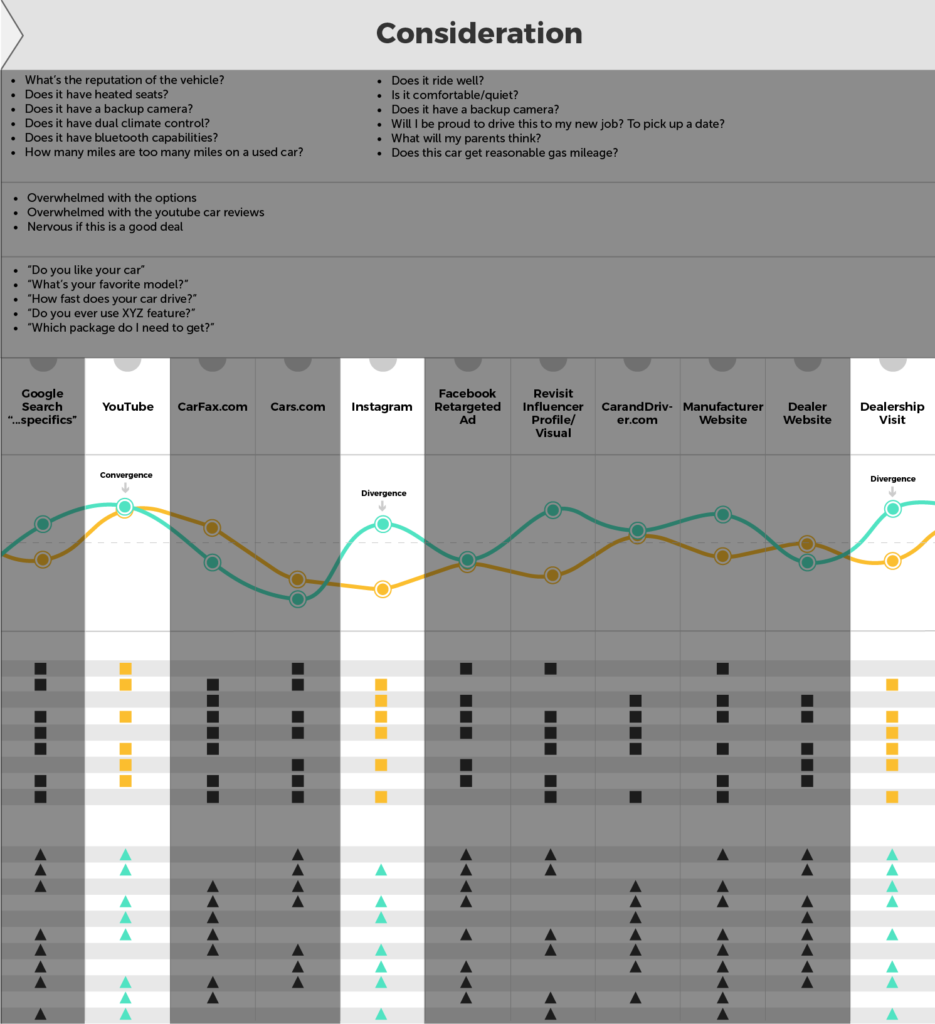
Let’s reexamine the car buyer CIM, this time looking vertically. As you can see here, there’s a convergence of the lines between the Google search and Instagram touchpoints. Here, both cohorts of people are happy, things are good.
But look at the last touchpoint in this part of the customer’s journey — the dealer visit. Remember that inherent distrust car buyers have of dealerships? That’s apparent here. There’s a wide gap between the ESAT and the CSAT. Employees seem happy when customers arrive on the lot, but customers don’t feel that same sense of delight. Clearly, something’s amiss that deserves our attention if we want to win that sale.
In digging deeper, you can drill down to the departments that are responsible for the sale. In this case, it’s the sales and finance teams. The dealer uses software called DealerCenter, a platform they recently adopted as their CRM, inventory tracker and finance manager.
When we look vertically, we can check for wide gaps between the two scores and then quantify these gaps on a scale from 0 to 100. As we quantify these data, we can quickly see where our investments pay off and where we’re missing the mark. For example, we can see here that the employees love the DealerCenter software, which could account for such a high ESAT score. That we’re still off by 80% from the CSAT score, however, indicates that something’s wrong. Since the platform is only used by the back office, we can determine that the low CSAT score is caused by something else, such as pressure from the sales team or the atmosphere of the dealership. This type of insight allows companies to drill down further and make strategic improvements to close that gap.
When we quantify these scores and look vertically at the CIM to see how our changes are impacting both our internal and external operations, we are better able to align our business with the customer’s path-to-purchase and push closer to reaching brand euphoria.
Change Agents, This Intelligent Framework Is For You
If you’ve read any of our past work, you know that we talk a lot about implementing the 3 Is — invent, innovate, and improve — to get out of an inflection point on the S Curve of Business. StoryVesting is a framework rooted in customer-centric data and analytics that can help you identify the 3 Is as well as areas for growth opportunity as you drive your organization upward.
Believe us when we say that we understand the complexity that goes along with wanting and needing to transform your business to keep pace with today’s fast market. This isn’t for the faint of heart. That’s why we are hired routinely to assist organizations with complex initiatives. Along with architecting and operationalizing complex initiatives for forward-thinking clients, we also serve up masterclass workshops that teach teams how to bring this hard-earned framework to life. These classes are for the change agents and forward thinkers who can’t wait to dig in their heels and push upward during inflection points.
- If you’re a C-Suite executive running a lean operation but want to become more agile to keep pace with today’s market, this is for you.
- If you’re a forward thinker ready to advance your skillset while growing your organization, this is for you.
- If you’re a thought leader ready to garner more attention out in the wild, this is for you.
- If you’re a data and analytics specialist looking for ways to better communicate your insights to your executive team and board, this is for you.
- If you’re a growth engineer eager to find new ways to spur your organization out of those strategic inflection points, this is for you.
We’ve gone through industrial revolutions thanks to data and machinery. We’re now in a new era of technical innovation in which artificial intelligence and machine learning are taking root. But you cannot harness the power behind these technological advancements without data, and you certainly cannot build humanized experiences without understanding and practicing empathy.
It’s so easy to get lost in tactics. The key is to focus on the strategic work of tacticians to ensure that those strategies flow. While we lightheartedly refer to this as “strategactics,” there’s real power and meaning behind this made-up word. It’s how we transform tactics-chasers into tacticians and create more agile teams. StoryVesting acts as a guardrail for businesses as they surge forward using data-centric insights to innovate, transform, modernize or even pivot on a dime.
Want to Go to the Next Level? Here’s Your Chance.
The industry is transforming quickly and you deserve to keep up with it, starting with continuing your learning and deepening your knowledge of the growth opportunities that lie in StoryVesting. We’d love to be your guide as you dig into this powerful framework and learn more about what’s possible.
Request more information about one of our RocketSource training programs, where you’ll learn foundational and relevant skills that will empower your team to become leaders in your industry.
Schedule a Discovery Call